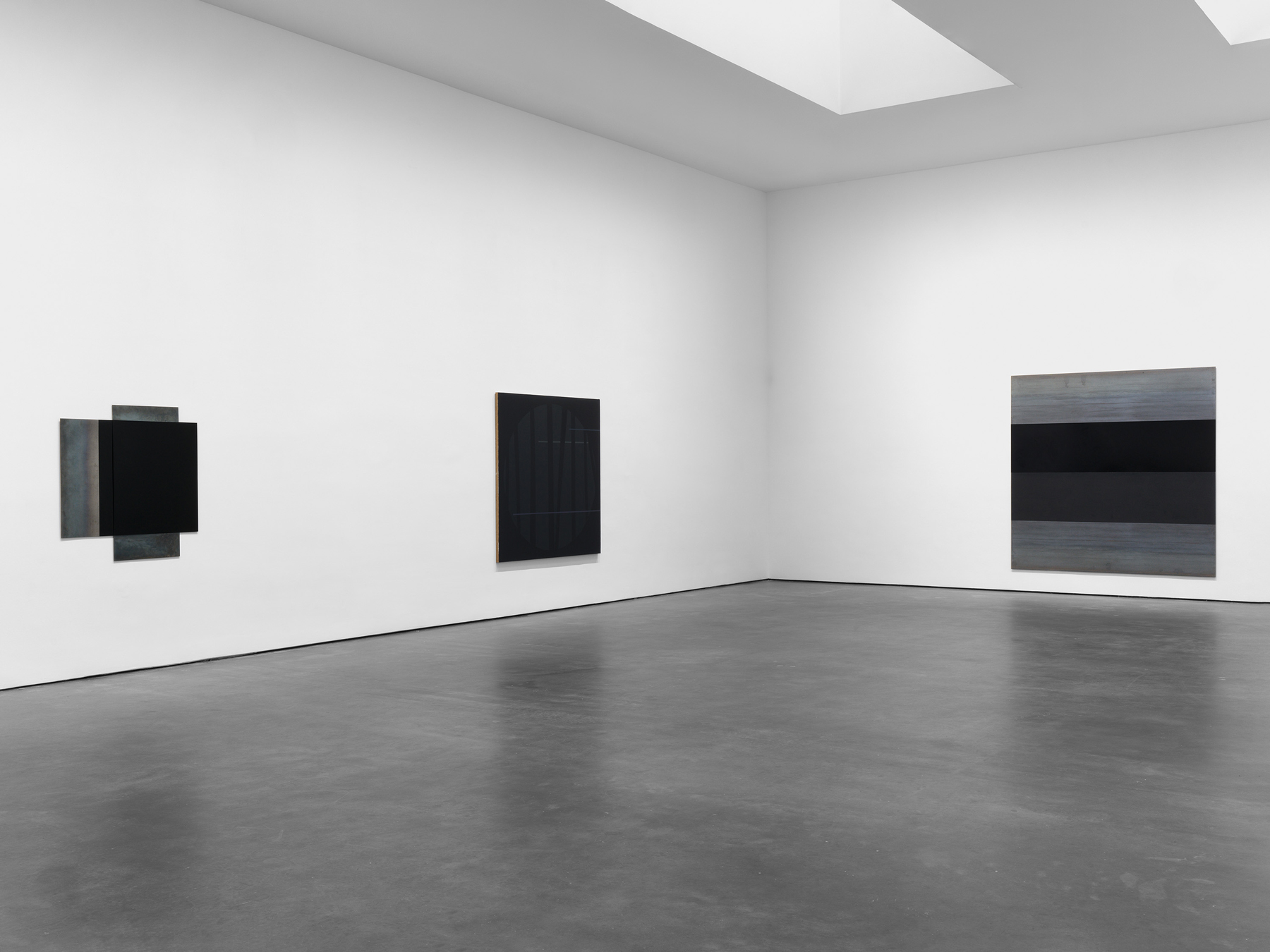
David Zwirner is pleased to present an exhibition of work by American artist Merrill Wagner at the gallery’s 537 West 20th Street location in New York. Featuring sculptures, paintings, works on paper, and photographs spanning the 1960s to the 2010s, Marking Time sheds new light on Wagner’s pioneering use of industrial and natural materials in her process-based approach, as well as her ongoing interest in the transformational effects of time.
In its emphasis on materiality and mutability, Wagner’s inventive work elides traditional categories of painting, relief, sculpture, and installation. Emerging in the 1960s, at a moment when minimalism and post-minimalism became dominant idioms, Wagner both eschewed and embraced their primary concerns, creating rigorous, hard-edged abstract compositions that subtly referenced the genre of landscape.
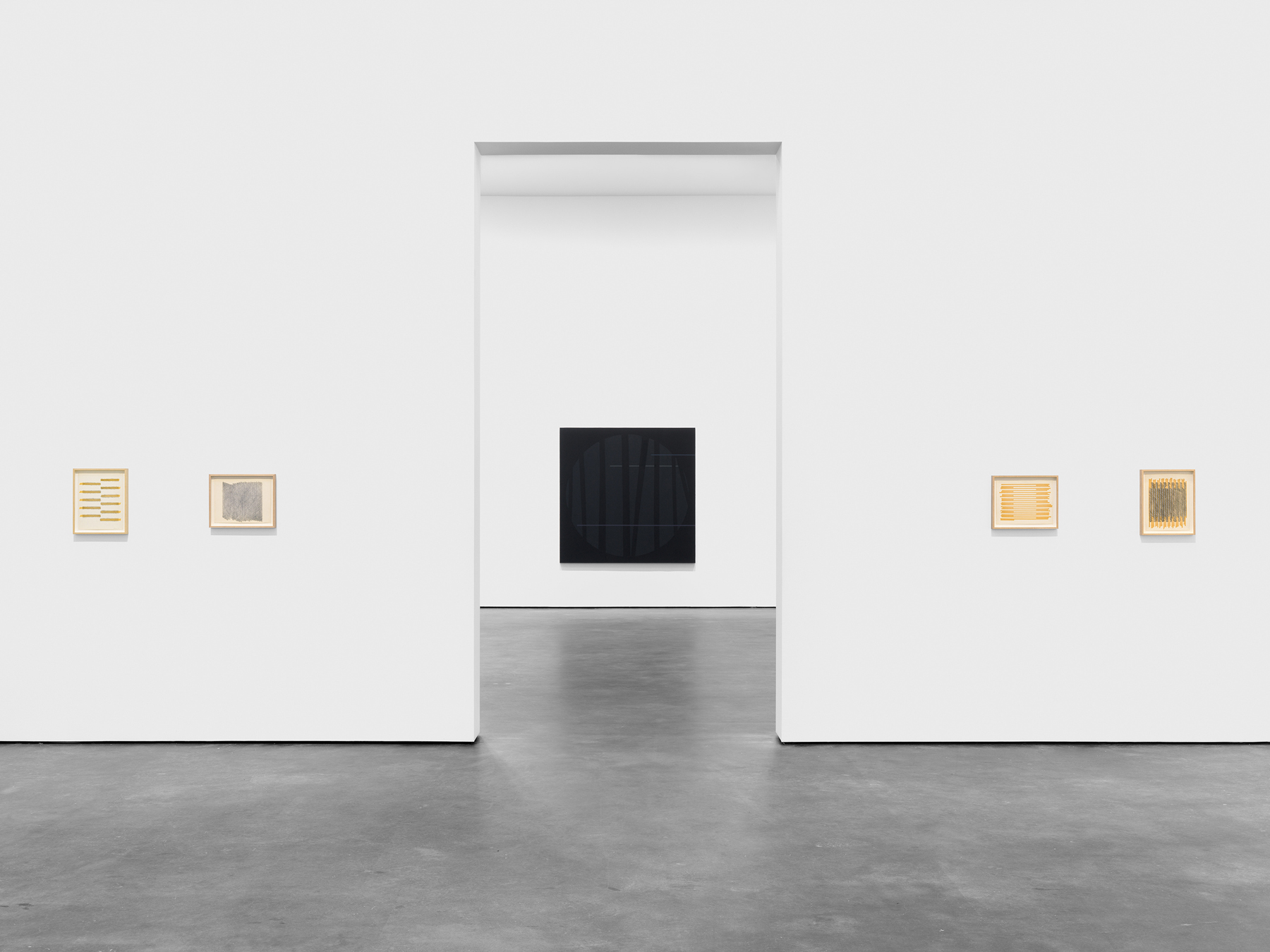
By the mid-1970s, the artist largely moved away from canvas and looked to nontraditional supports as surfaces for color. These alternative substrates interested Wagner not only for their textural appearance but also for their allusions to the natural world and their inherent connection to process and chance. Her Pacific Northwest upbringing is resonant throughout her practice, and she has continued to make work outdoors throughout her career. By integrating the support within the compositional logic of her works, and ordering and joining fragments by adding painted elements, Wagner mediates between the natural and the constructed.
As the exhibition’s title suggests, Wagner’s practice is concerned with the recording of time in multiple registers. Moving with ease between a range of supports—including canvas, paper, slate, stone, and steel—she draws and paints directly on the surface of her works, allowing pigments to fade and mutate as they, in turn, mark the cycling of the seasons. While some of Wagner’s chosen materials are naturally occurring and others are human-made, they are united by a common thread: they have all borne witness to time, conjuring associations with geological histories.
© Text and Photo courtesy of David Zwirner