PKM Gallery is pleased to present reimagine Yun Hyong-keun, a solo exhibition dedicated to Yun Hyong-keun (1928–2007), a central figure in postwar Korean art, on view from August 26 to October 3, 2026.
Presented across PKM and PKM+ to mark the opening of Yun Hyong-keun House in Seogyo-dong—the residence and studio where the artist lived and worked—the exhibition brings together 30 works dating from the 1970s through the 2000s. Major paintings from different periods, works on hanji, and archival materials offer a multifaceted view of the artist’s life and practice.
In the 1970s, Yun developed his distinctive visual language through his Cheonjimun (Heaven and Earth Gate) paintings, characterized by a restrained palette of blue and umber. These works are inseparable from the turbulent experiences that shaped his life. Tracing more than three decades of Yun’s practice, the exhibition follows the development of his pictorial language from early works to the increasingly pared-down paintings of his later years. It revisits the artist’s sustained commitment to condensing lived experience and emotion into a quiet, disciplined language of painting.
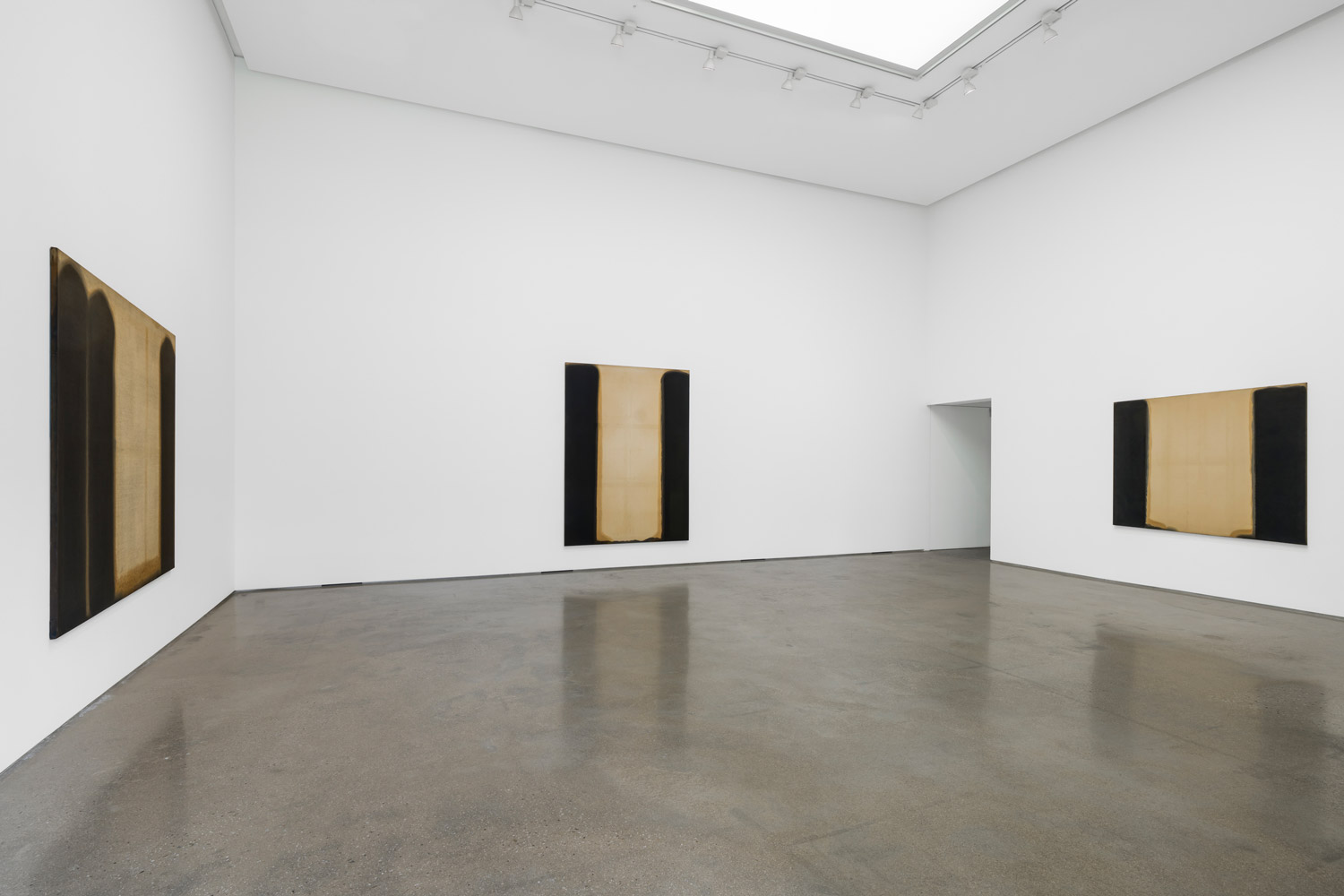
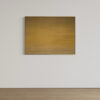
At PKM, visitors are greeted by large-scale Cheonjimun paintings from the 1970s. Around 1950, Yun endured life-threatening circumstances in the aftermath of such events as the National University Establishment Opposition Movement and the Bodo League Massacre. Later, while teaching at Sookmyung Girls’ High School, he was arrested in 1973 after protesting the school’s entrance-examination scandal. The death of his father-in-law and mentor, Kim Whanki (1913–1974), the following year prompted Yun to reflect anew on Kim’s legacy and to reconsider his own artistic path.
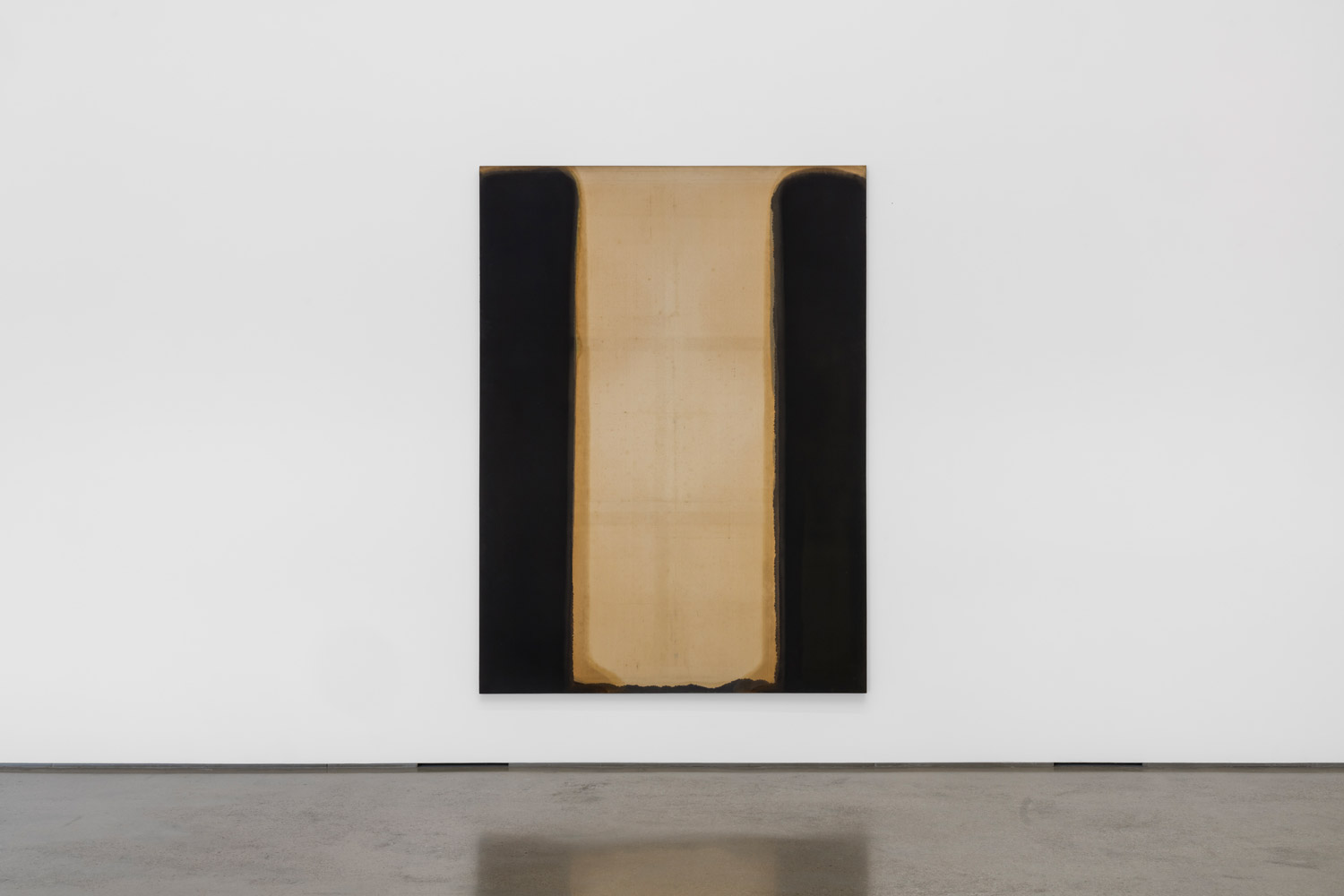
During this period, Yun developed a restrained mode of painting in which blue—associated with the sky—and umber—associated with the earth—are layered on the canvas. Vertical blue-and-umber forms rise along either side of the composition, while the open space between them evokes a gate connecting heaven and earth.
From the mid-1980s onward, Yun expanded his practice through large-scale compositions in which dark fields extend across the canvas. He also experimented with allowing pigment to seep beyond the contours of the forms and onto the sides of the canvas. The presentation at PKM spans works from the early 1970s to the early 1990s, focusing on the evolution and expansive variations of the Cheonjimun motif.
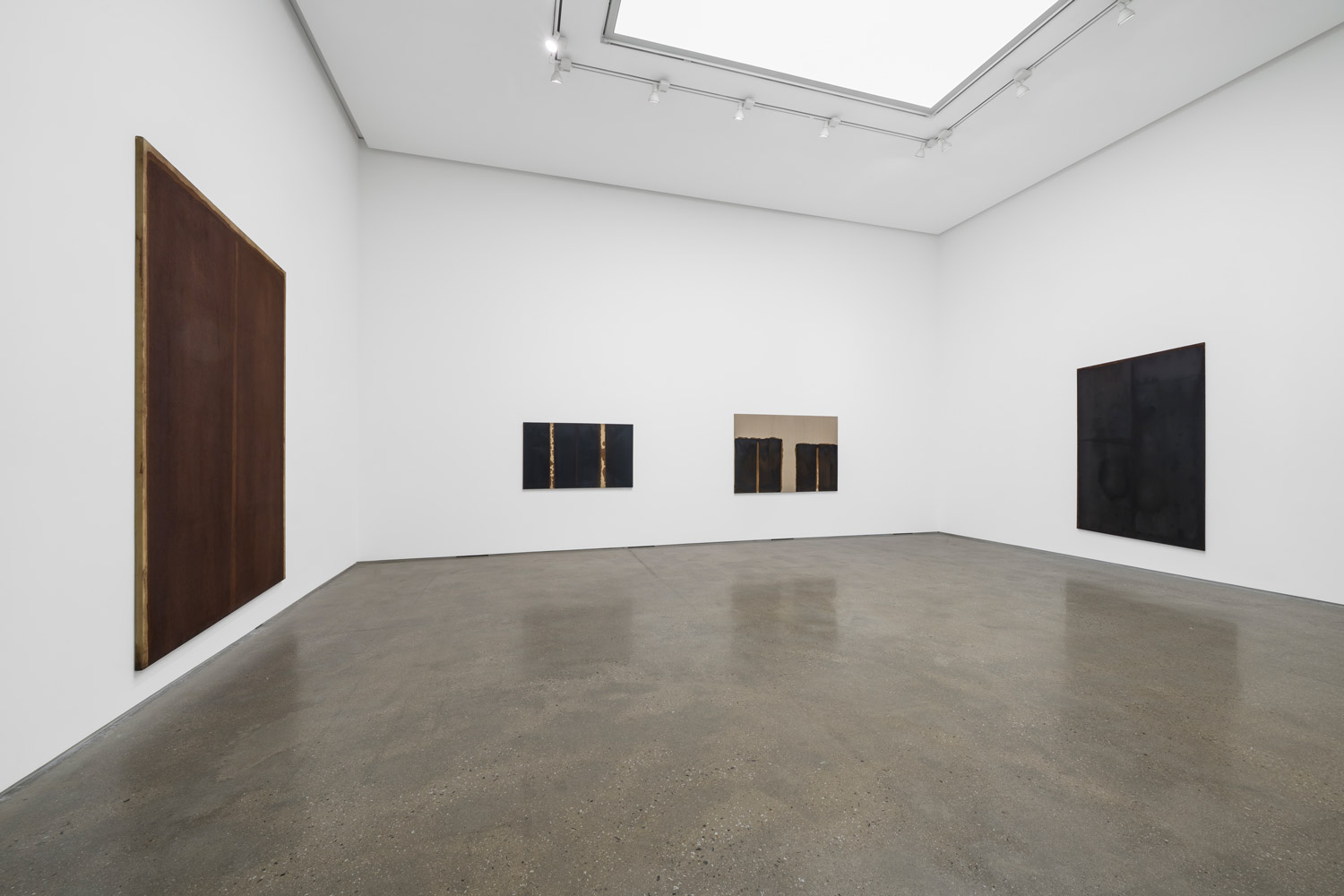
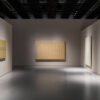
At PKM+, the exhibition presents paintings from the 1990s onward, a period in which Yun’s work moved toward increasingly reductive and rigorously structured forms. Following his encounter with the American Minimalist sculptor Donald Judd (1928–1994) in 1991, and through more active engagement with the international contemporary art world, Yun developed compositions of greater scale, clarity, and formal resolve. As the earlier variations of the Cheonjimun motif receded, deep, near-black tonalities and rigorously defined rectangular forms came to the fore. The resulting paintings are pared down to questions of scale, proportion, and presence, revealing the dignity of simplicity that Yun pursued throughout his life.
Toward the end of the exhibition, works on hanji are presented. During his approximately two-year stay in Paris with his family, beginning in 1980, Yun continued to work with hanji while exploring the relationship between pigment and support. For the artist, hanji offered a warm, soft, and modest surface that allowed paint to seep and spread naturally. He returned to the medium in the early 2000s, developing works on hanji not as preparatory drawings or a supplementary practice, but as an independent body of work.
The archival presentation traces the past and present of Yun Hyong-keun House, the site from which his artistic practice emerged. Within this home, the family’s living quarters and the artist’s studio coexisted, allowing the experiences of daily life and artistic reflection to accumulate over time. By bringing together the life Yun lived and the place in which his works were made, the exhibition invites viewers to reconsider an oeuvre inseparable from lived experience, echoing the artist’s words: “Art is a byproduct of everyday life, a trace.”
Yun Hyong-keun was a leading figure in the development of Korean Dansaekhwa and was invited during his lifetime to numerous influential international events and exhibitions, including the São Paulo Biennial (1969, 1975), the Venice Biennale (1995), and the Gwangju Biennale (2000). In 2018, the National Museum of Modern and Contemporary Art, Korea, Seoul presented the first retrospective dedicated to Yun Hyong-keun as a Dansaekhwa artist, and the exhibition subsequently traveled to Palazzo Fortuny in Venice the following year. His works are held in the permanent collections of National Museum of Modern and Contemporary Art, Korea; Leeum Museum of Art; Tate Modern; the Chinati Foundation; the Art Institute of Chicago; and the Tokyo Metropolitan Art Museum. Nearly 20 years after his death, his work continues to be recognized by major museums and collections around the world, sustaining his international reputation.
© Photo courtesy of PKM Gallery