Anima Mundi are honoured to present ‘Etemenanki’ alongside the launch of Richard Nott’s monograph ‘Vestige’ published by Samson & Co.
Throughout his life, Richard’s work was concerned with accumulation: material laid upon material, structures established and disrupted, surfaces repeatedly buried then excavated. A painting was never simply made. It was subjected to duration and became a product of time. A surface emerged, disappeared and was re-revealed, altered by its journey; each intervention left behind some evidence of what had preceded it. These works contain ruin and their own attempts at reconstruction. Anastylosis: the rebuilding of something ruined from its surviving fragments. Richard understood destruction not as the opposite of making, but as a necessary part of it. To cut, scrape away, burn, fracture or obliterate could reveal another possibility. What had been lost became material for what followed….
A hard surface can suggest soft tissue. Veneer becomes skin. A scratch – a wound. Damage can be a point of rebuilding. Trabeculae, Reticulum, Stroma, Rhytidome, Cicatrix, Lacunae, Osteon, Haemolysis. Framework, network, supporting tissue, bark, scar, cavity, dissolution. These titles were not conceived as a programme from which the paintings were made. As always with Richard, they came afterwards. But together they seem to describe a world in which body, material and structure became increasingly connected.
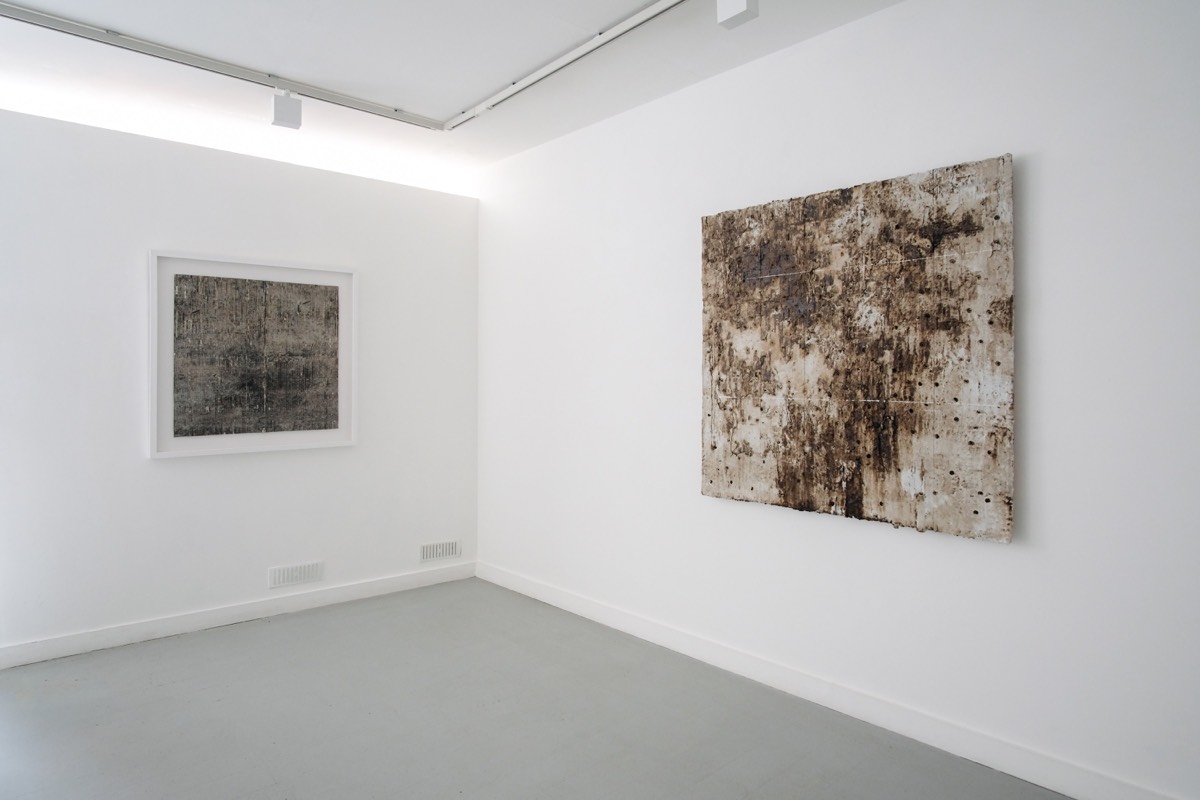
Etemenanki was the name given to the great ziggurat of Babylon, often associated with the biblical Tower of Babel. It was not simply a building, but an attempt to establish a connection between the material world and something beyond it. Richard had always constructed his paintings as much as he painted them. A logical structure danced with its twin sister chaos. In the works that borrow the exhibition title, these structures become increasingly precarious. The form is pushed towards the limits of what it can sustain – perilous, unstable, perhaps on the threshold of collapse.
It is difficult to encounter these paintings without knowledge of the circumstances in which they were made. Richard was seriously ill for the last six years of his life, and making all of these works demanded an increasing physical determination. Yet it would be reductive to read the works simply as representations of illness. Richard had spent decades developing this language of accumulation, erosion, instability and renewal. What changed, and became even more extraordinary, was the intensity with which life and the processes already present within the paintings began to coincide.
Perhaps that is why these works can appear at once so fragile and so extraordinarily resilient. They do not resolve themselves. They hold together while acknowledging the possibility of fracture. Voids remain voids. Scars are not concealed. What has disappeared is allowed to leave its trace. Eidolon. Vestige. An image of what is absent; a trace of what remains. They hold within them the complexity of what it is to be human. They embody hope, spirit and determination. They are the material manifestation of a life force determined to endure.
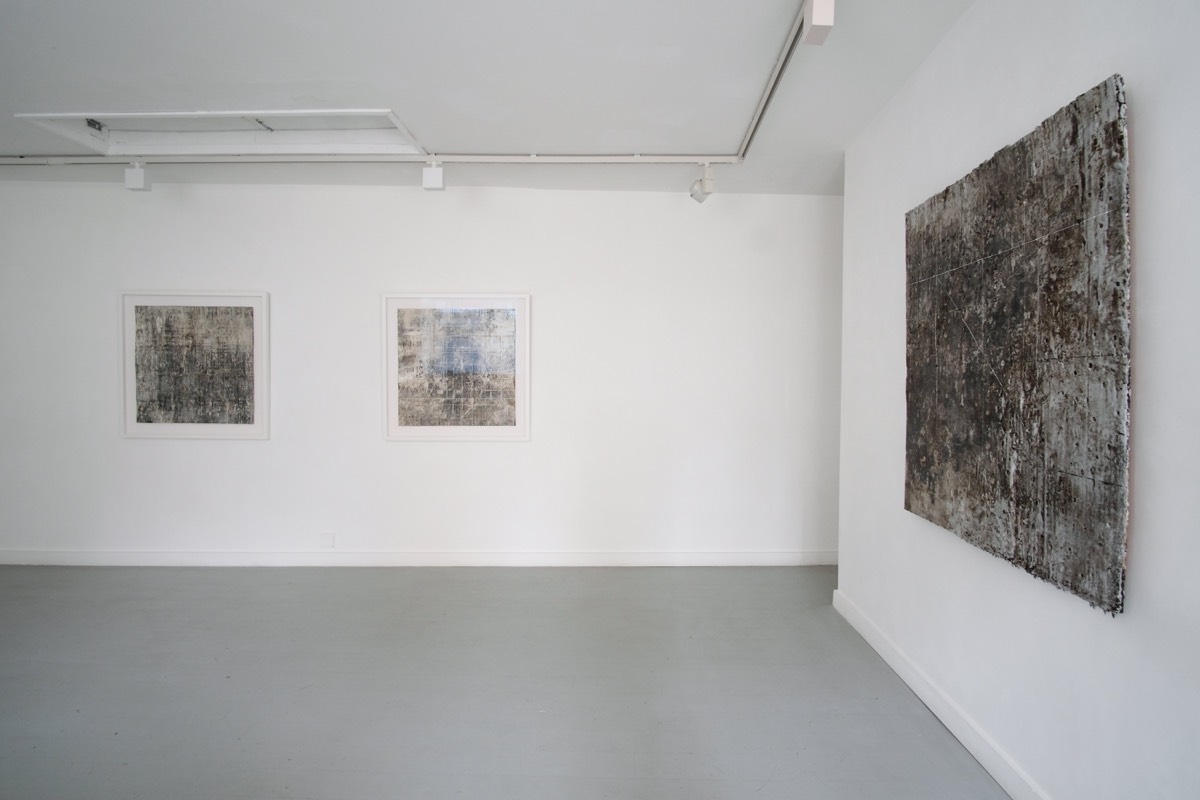
Richard once said of his work, “Just keep working on it, working on yourself. I am making myself.” He continued to do precisely that, with profound and extraordinary persistence, despite everything his body demanded of him, right up until the end. These paintings are the final evidence of that process. Not conclusions, because Richard had little interest in conclusions, and they are certainly not paintings that were concerned with reaching an intended state of completion. Instead, they are objects arrested in the act of their own becoming: built, excavated, damaged, repaired and transformed. Albedo: purification following dissolution. They are what remained when Richard finally had to stop. Yet through their existence he leaves a trace of himself behind here with us.
Joseph Clarke, 2026
© Text and Image Courtesy of Anima Mundi Gallery