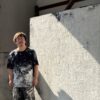
“3 Questions for…” showcases and promotes the work of upcoming artists in the early stages of their careers. This time I would like to share with you the captivating artworks of Viktor Kobylianski.
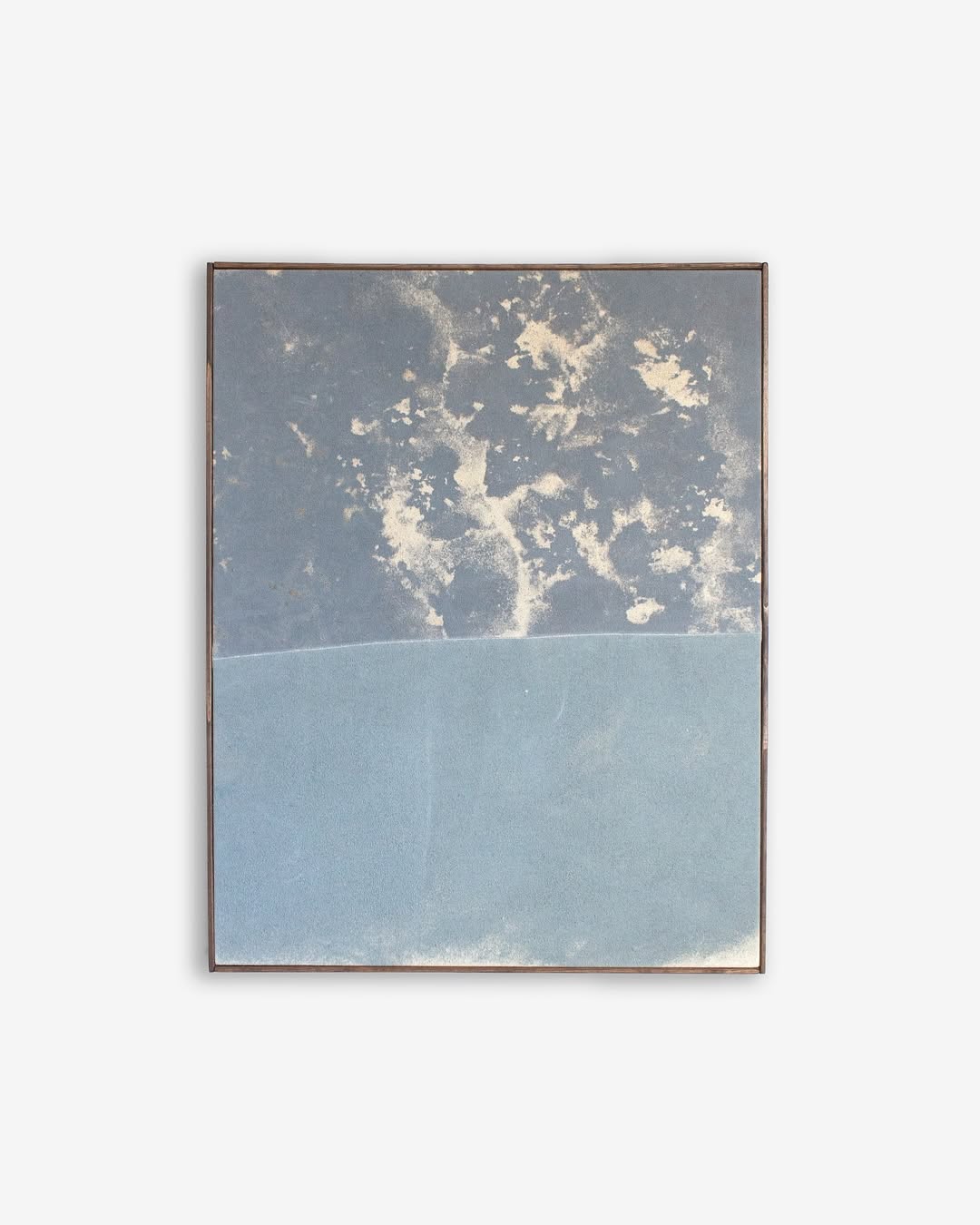
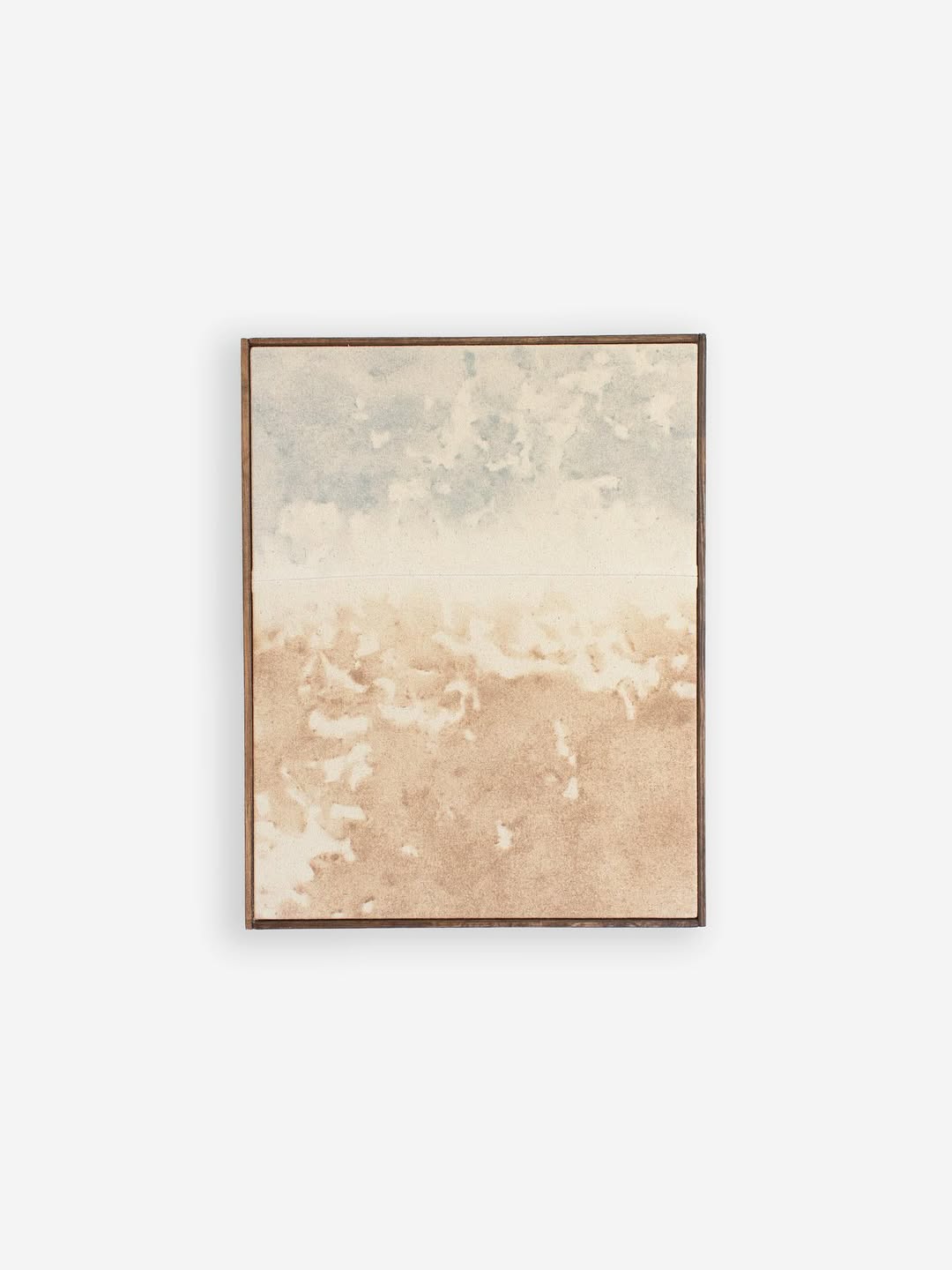
Viktor Kobylianski (b. 1995, Kyiv, Ukraine) is a Portland-based artist whose process-driven practice explores the quiet persistence of traces. Working with materials such as cement slurries, dust, sand, and pigments, the artist spreads and manipulates these materials across unprimed fabric with his hands. He allows them to settle and cure before partially removing them, leaving behind residues that become the artwork. The canvas thus becomes an archival surface that preserves evidence of an event rather than depicting it.
The resulting compositions are atmospheric and richly textured: irregular stains and organic patterns are reminiscent of natural sedimentation, weathered paper, or geological formations. The muted color palette – soft beiges, pale ochers, delicate gray-blue nuances, dusty pinks – appears as if marked by time and weather. The works feel calm and almost fragile, inviting the viewer to look closer and explore their surface.
Balancing presence and disappearance, Kobylianski’s works embed meaning into the fabric itself. What remains is not an illustration of an occurrence but its subtle imprint. To learn more about his art and his process, I had the pleasure of asking him three questions:
Viktor, what inspired you to become an artist, and how has your artistic expression evolved since then?
My early creative interests were broad, and for a long time I didn’t have a clear sense of what I wanted to pursue professionally. I believe that starting to make instrumental music in my early twenties was what inspired me to begin exploring visual art in the first place.
Beginning with painting, I became increasingly drawn to the withdrawal of the image, hidden hints, and states of damage within the work. An interest in casting concrete objects later led me to experiment with unconventional materials and approaches to canvas, gradually shaping the work into what it is now.
How would you describe your work to someone who has never seen it, and what do you hope viewers take away from it?
I would probably describe my work as calm, abstract surfaces that invite slow looking. I think of them as physical records, almost like cache storages, holding damaged or incomplete memories that remain accessible after the fact.
For me, meaning in the work emerges through material behavior: how it reacts on the fabric while I’m applying it and how that reaction remains imprinted after the process. When I look at the final surface, it often draws me in, inviting a sense of immersion and an attempt to imagine what might have happened.
I hope viewers can experience something similar—an individual, open-ended interaction where meaning isn’t given but formed through process and material residue.
When I look at the final surface, it often draws me in, inviting a sense of immersion and an attempt to imagine what might have happened.
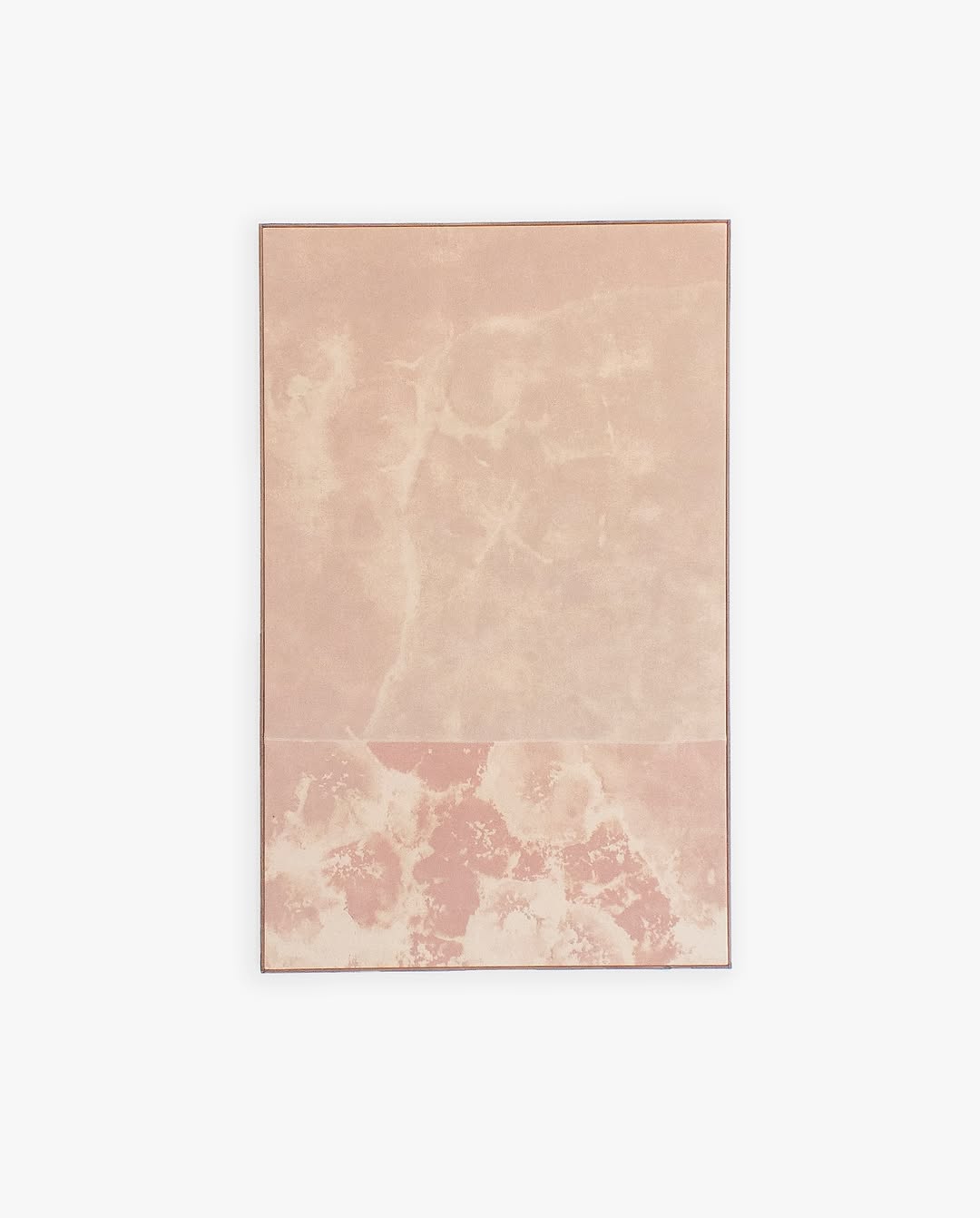
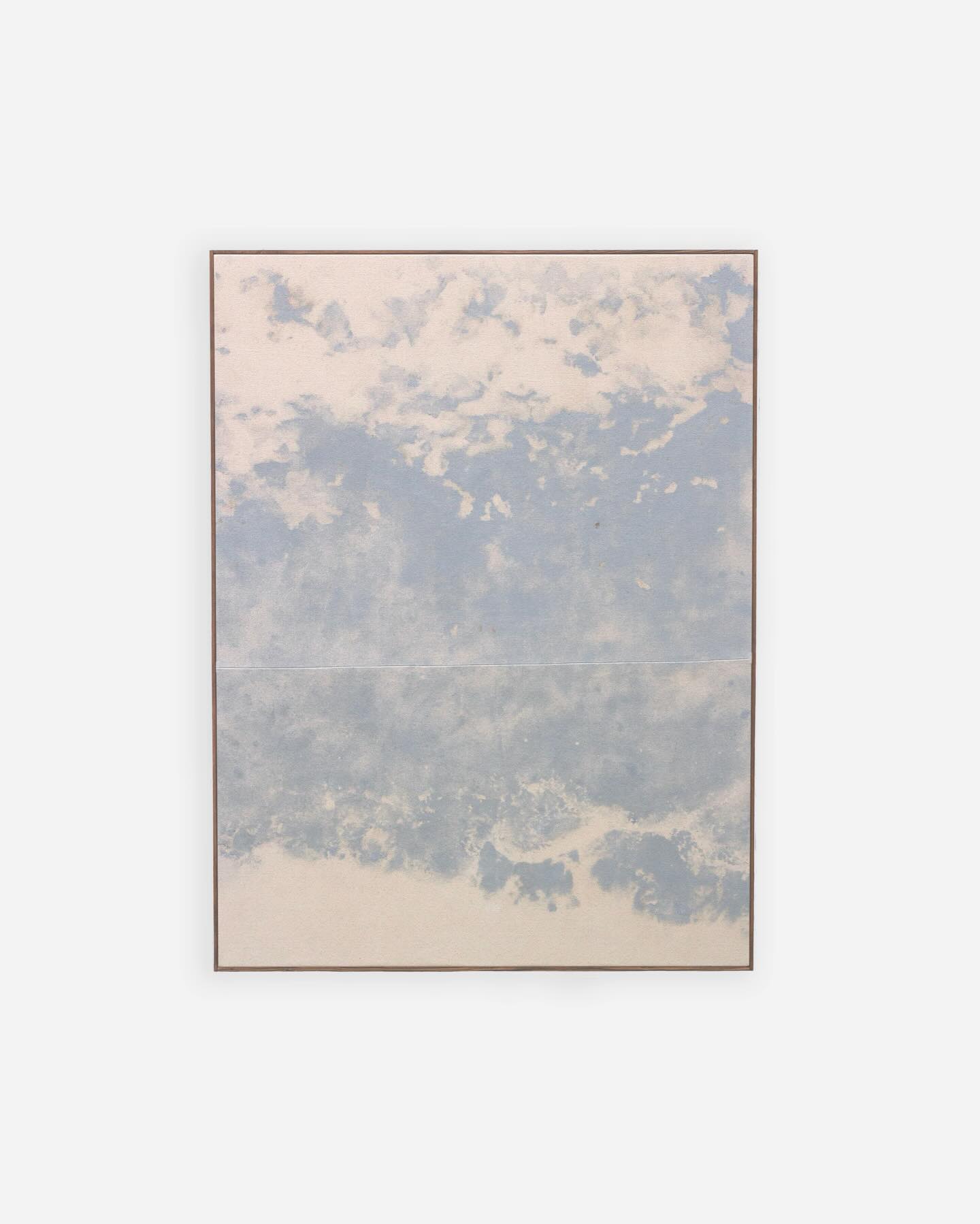
What are you currently working on and what are your plans for the future? Are there any subjects that you would like to explore further?
Right now, I’m mostly focused on making work that feels right to me, even when individual pieces don’t immediately complement each other when shown side by side. I tend to drift at times, but I want to believe I can sense when something belongs to the same body of work and when it starts to become something else.
I think of my practice as moving in phases that slowly merge into one another. One body of work doesn’t end cleanly; it fades and grows into the next. I like paying attention to these transitions.
As for the future, I don’t want to define it too clearly. I hope it brings more light and more honest work.