In the latest edition of our interview series, we once again dive into the world of minimalist aesthetics. In inspiring conversations with creative minds from the fields of architecture, design, and art, we explore how they are guided by their vision and how they express it in their works. Along the way, they provide us with interesting insights into their creative process and reveal how they perceive and shape the world. This time, I had the pleasure of having an inspiring conversation with Jean Philippe Lagouarde.
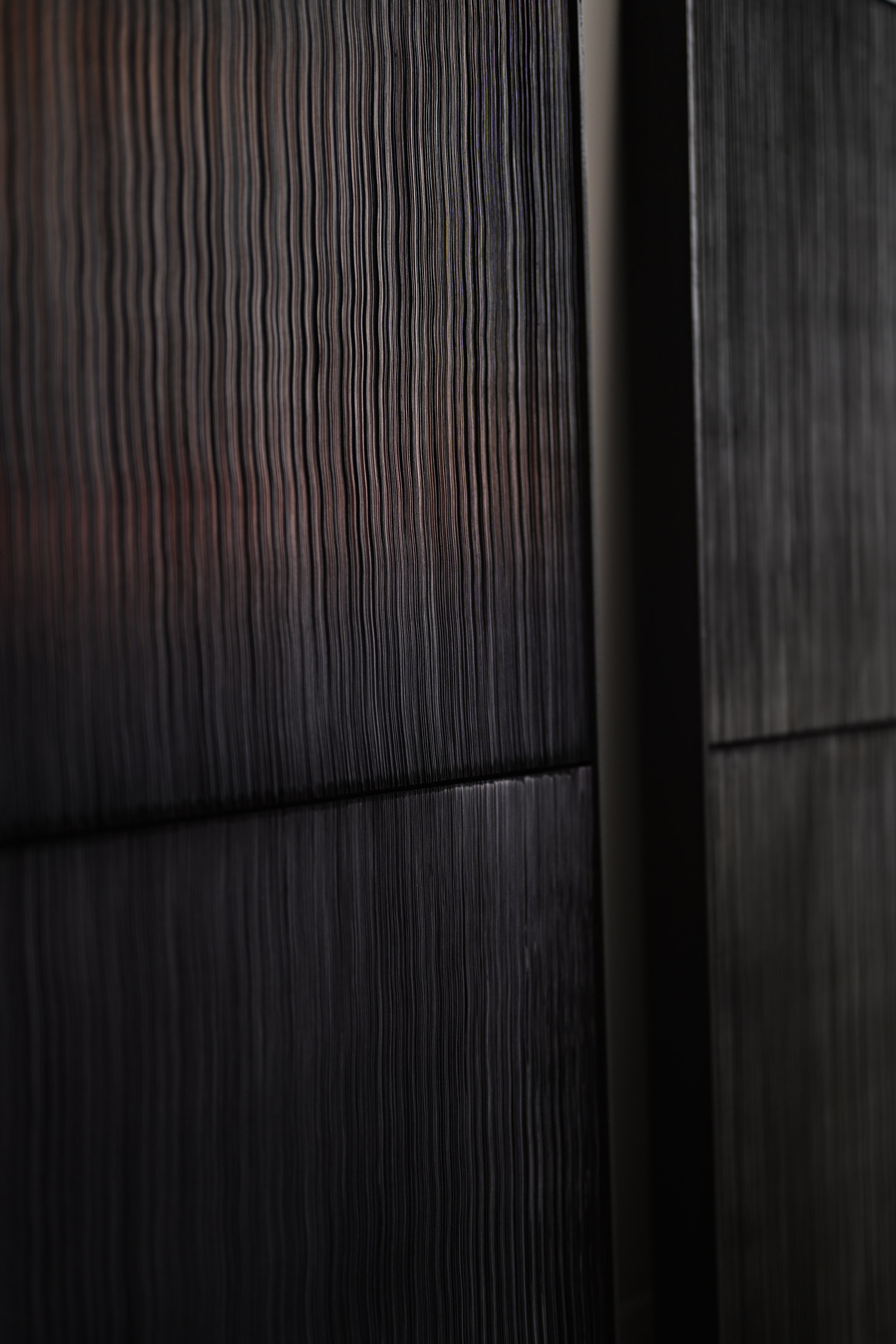
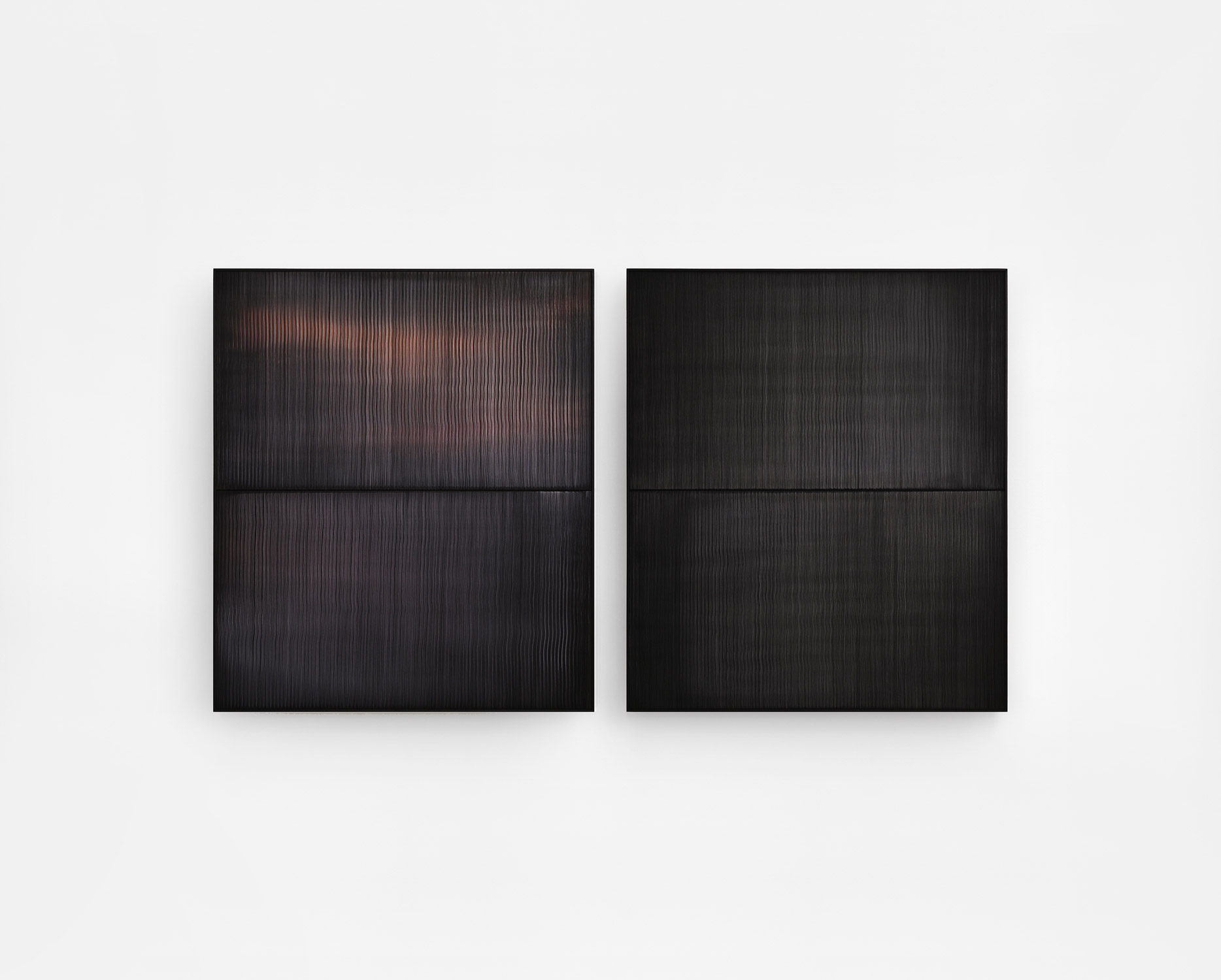
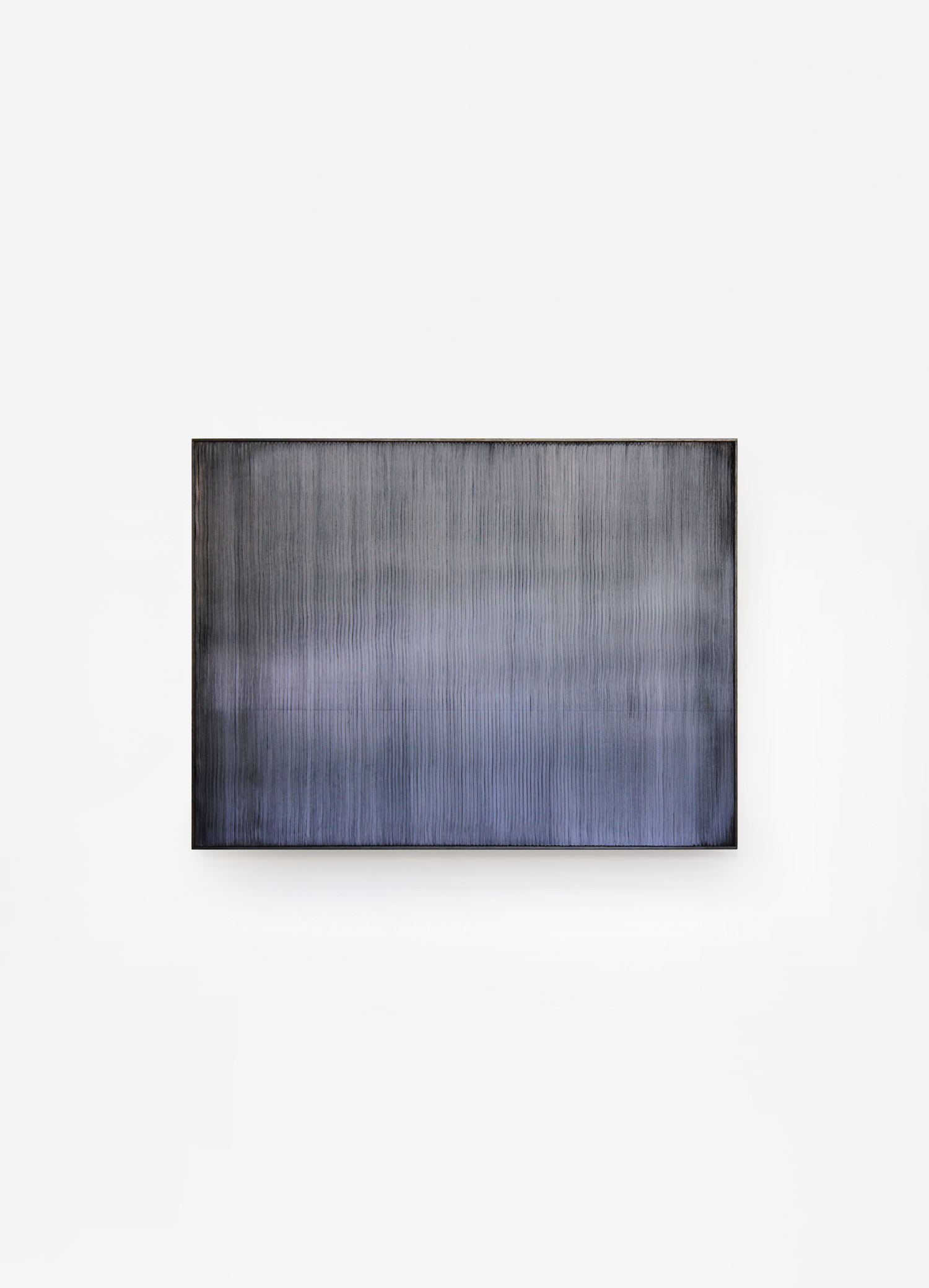
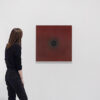
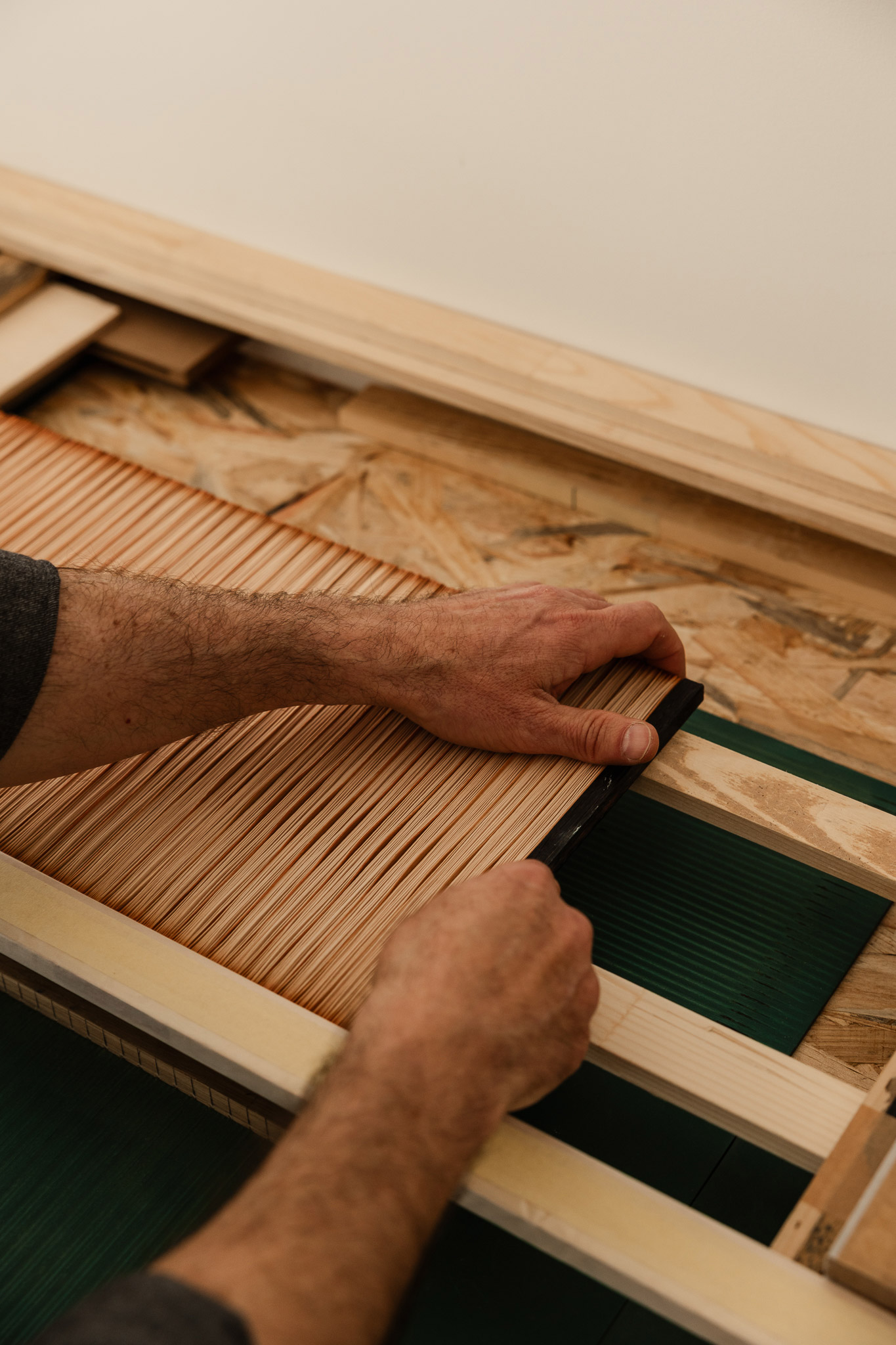
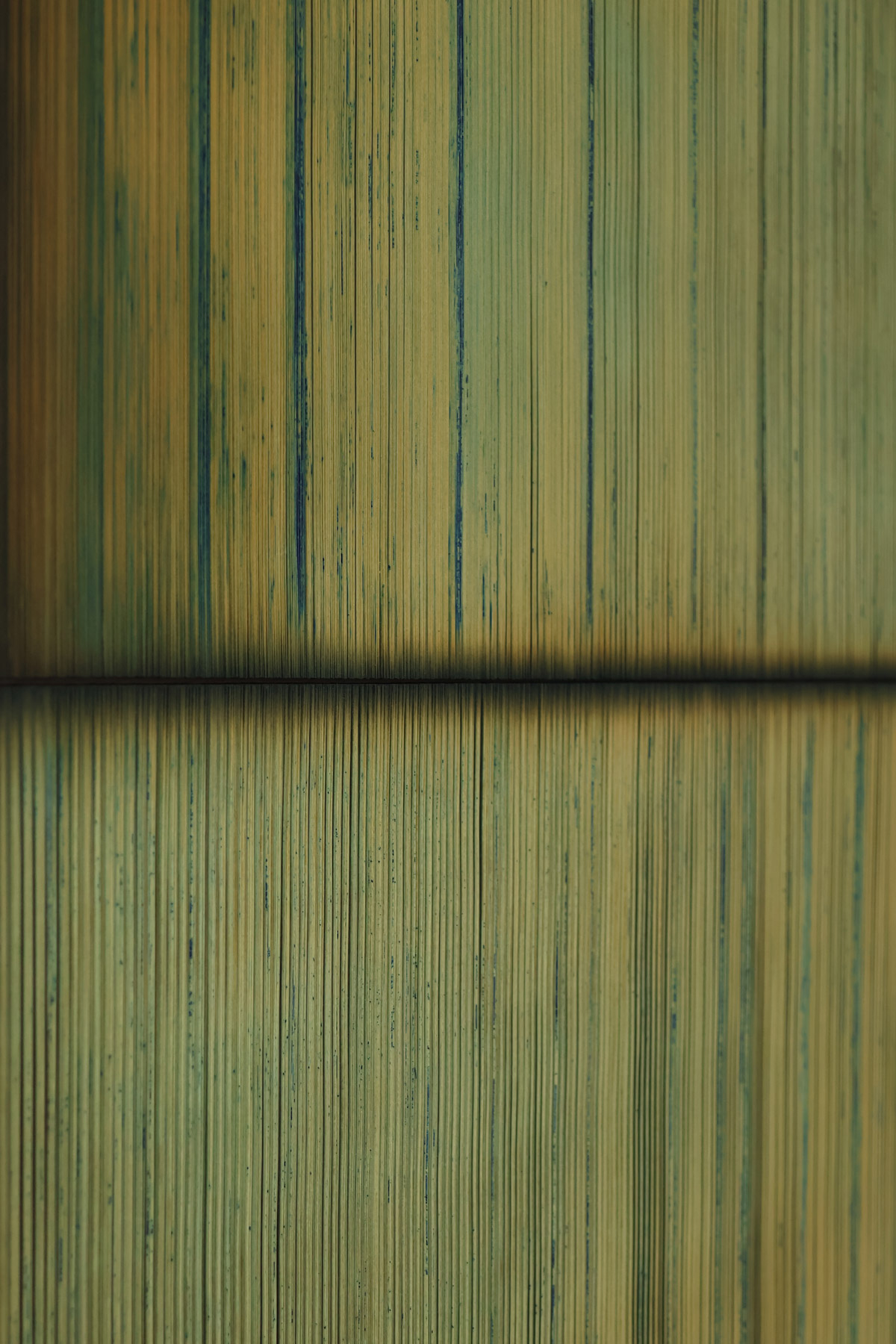
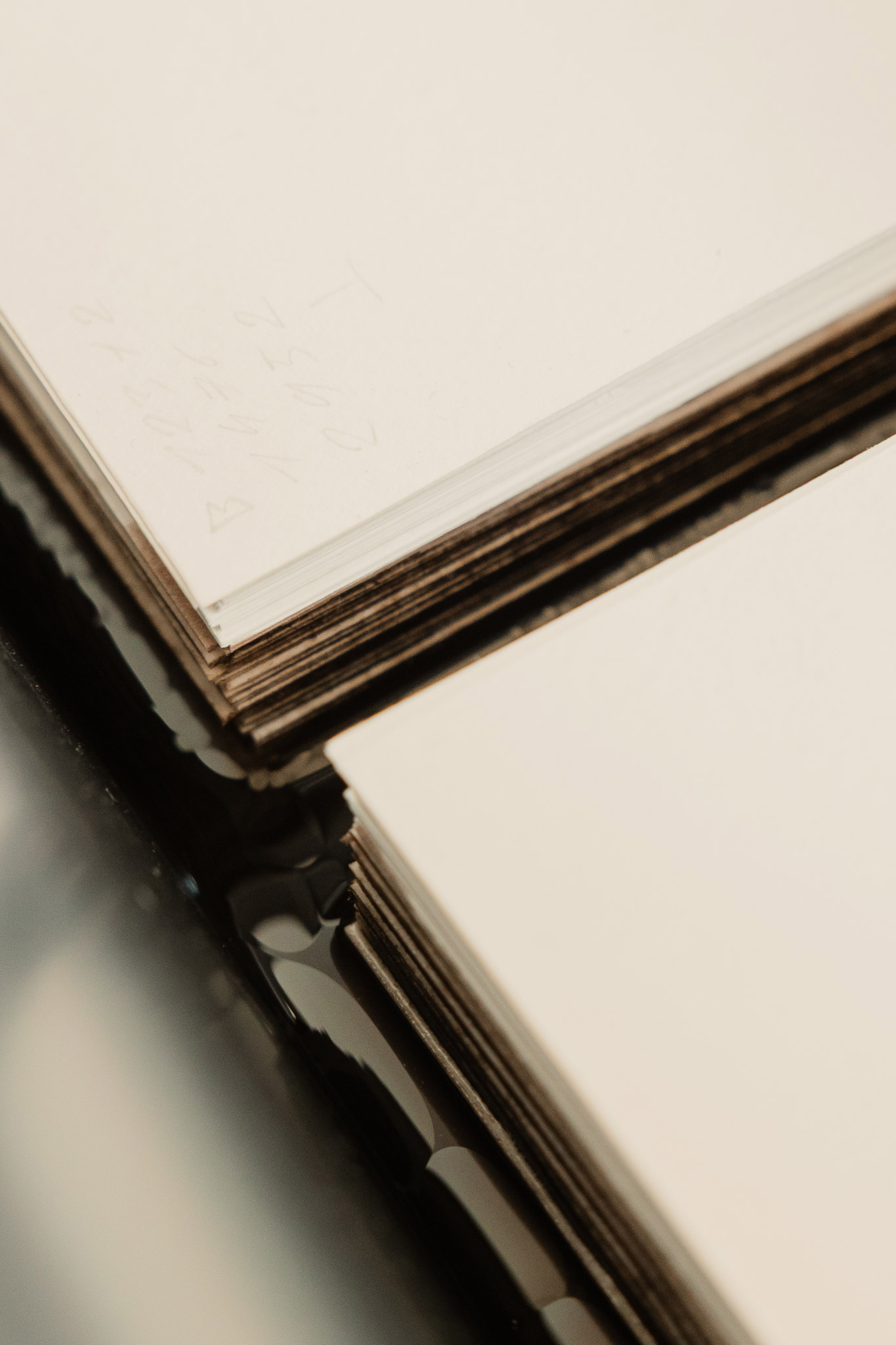
French artist Jean Philippe Lagouarde (b. 1976) creates monochrome artworks using dyed blotting paper – a fragile, absorbent material that allows ink to bleed and reveal its own inner life. Through a meticulous and repetitive process, he cuts thousands of thin strips and arranges them into rhythmic compositions. His works explore perception and the subtle dialogue between material, light, air, and time – resulting in pieces that feel at once ordered and controlled yet shaped by serendipity.
In this interview, I speak with Jean Philippe about the philosophical ideas behind his practice, how his visual language emerged and what it means for him to “witness” rather than to create his work. We talk about his relationship to the term Minimalism and the evolving, living nature of his pieces. He also shares what he’s currently researching and how new encounters and mediums might shape his next steps.
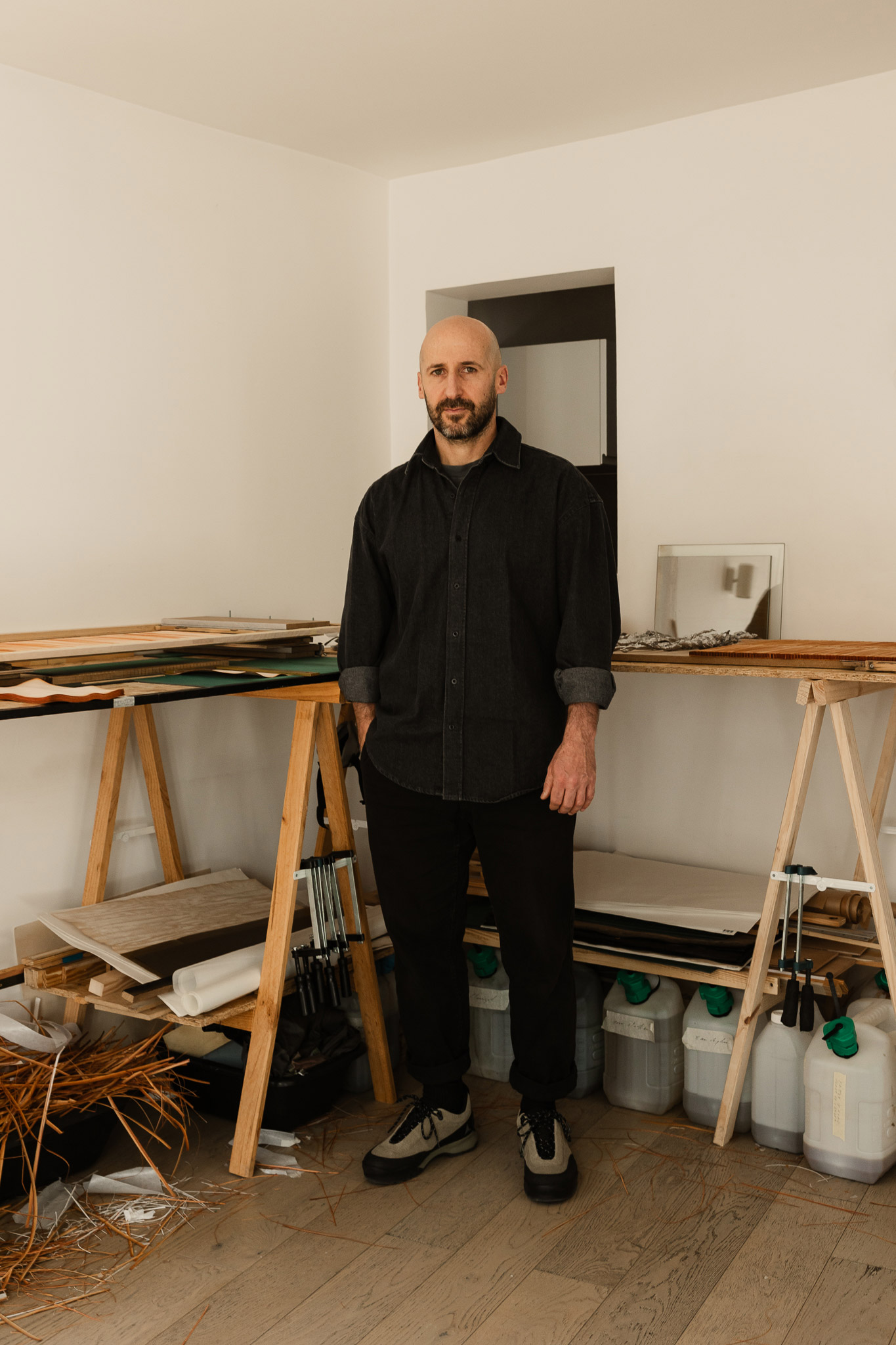
Jean, thank you so much for your time! Please tell us, how did you get into art and how has your artistic language developed over the past few years?
I waited a long time before throwing myself into it—it’s been 11 years now. I started painting as a teenager, and drawing had long been my way of expressing myself. I began studying art history and fine arts in high school. That was a real chance for me; it saved me more than once, and it still does today. I waited until I truly needed it to return to it.
I developed my vocabulary in response to an overflow of stimuli that I needed to channel. I began with a lot of experimentation. I nourished myself with philosophy to put words onto my research, and some words stood out more than others because of their eloquence. So I transposed them. For instance, Jean-Paul Sartre’s idea of contiguity, which offers a perspective on the perception of the object and the singularity of our affects during that process. I loved imagining this idea of sedimentation of affects in all their multiplicity. That’s when I began materializing my support in a contiguous way.
At that moment, it was an introspective interaction with—and emerging from—the material. At the same time, I kept reading, and catharsis developed through interaction with places; more recently, micro-sociology has surfaced as a way to embody my work.
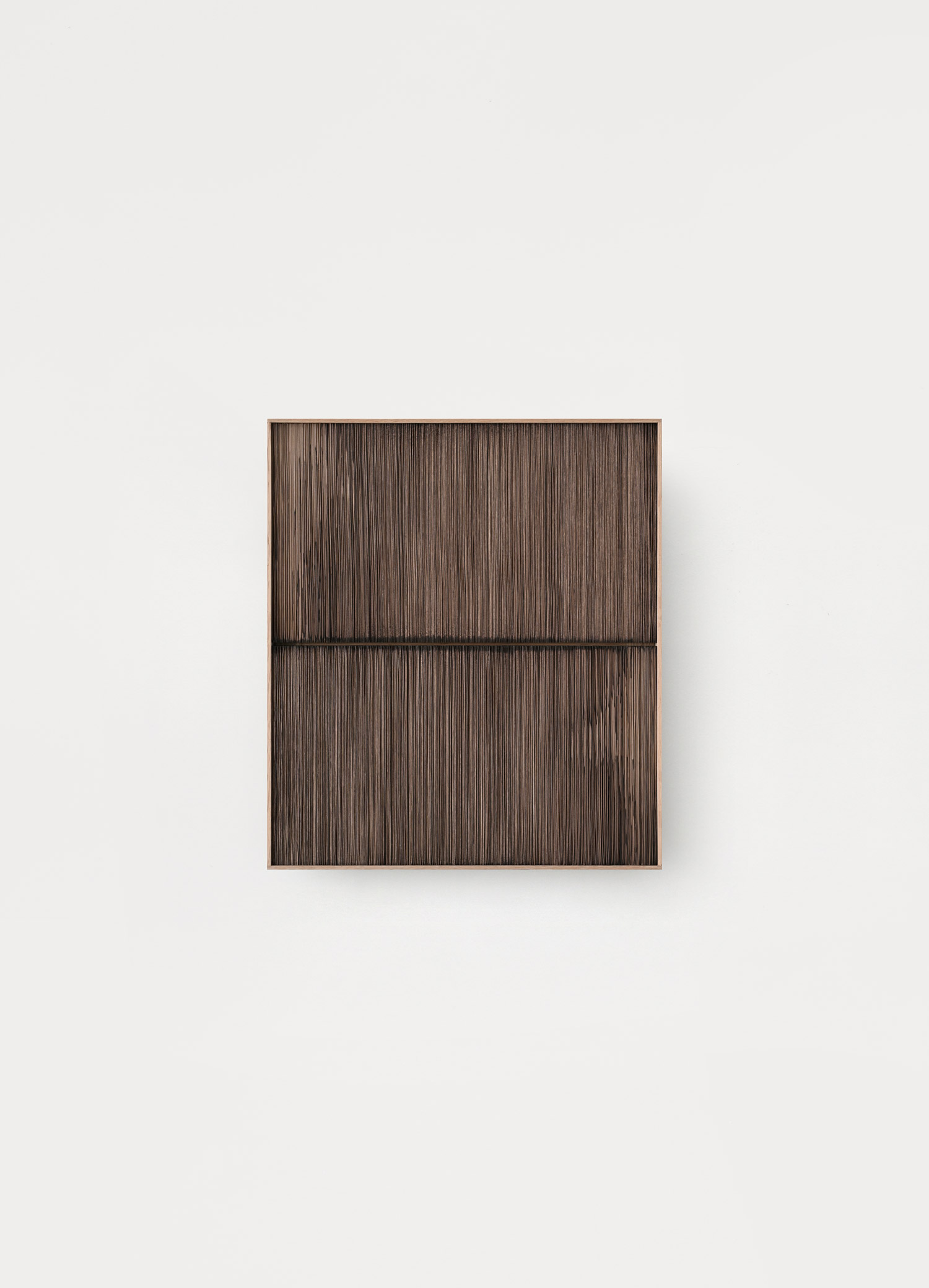
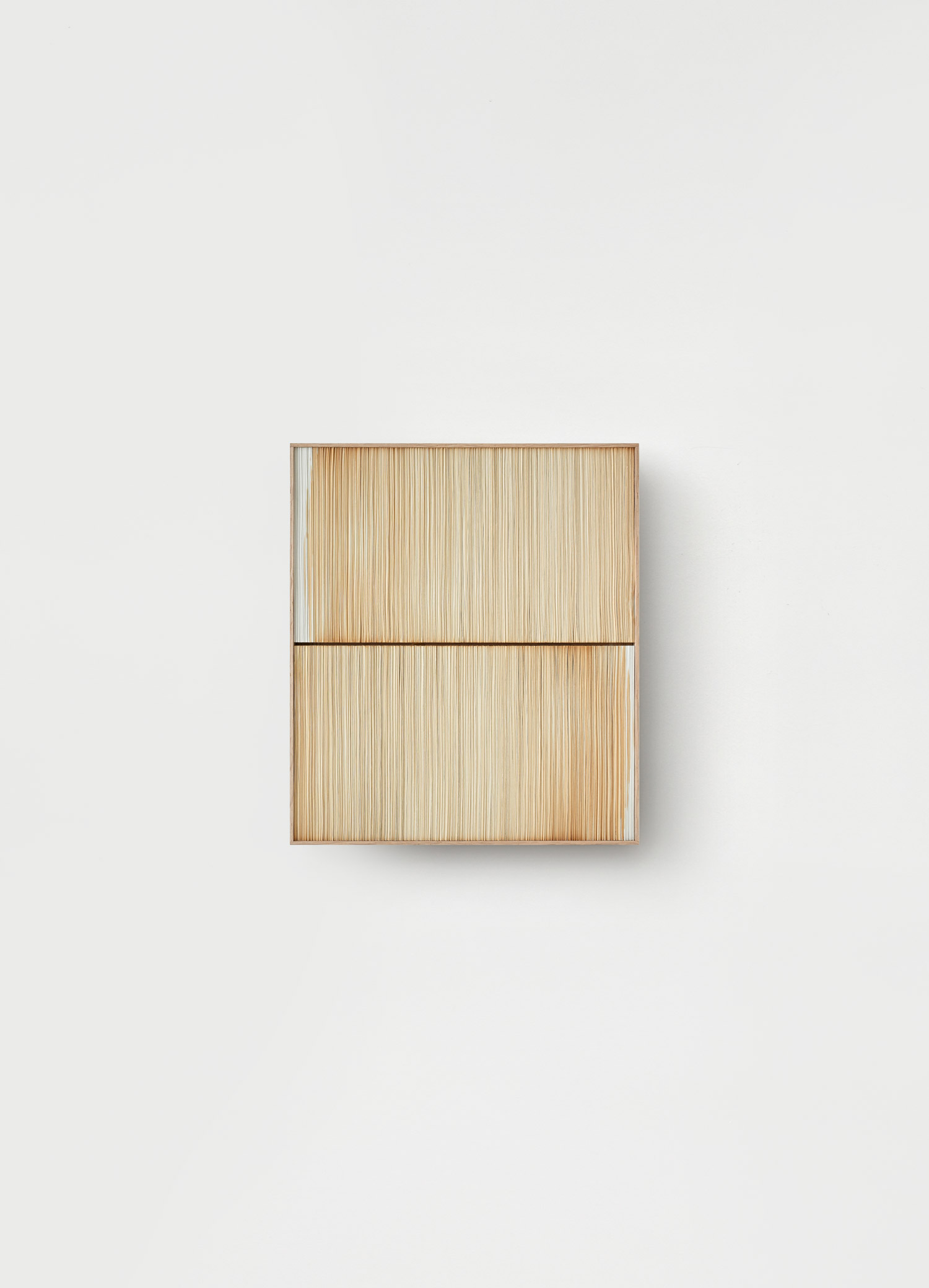
Blotting paper is central to your work. What inspired you to choose this medium, and what particular challenges and advantages does it offer you?
Blotting paper comes from my childhood. I preferred watching the ink from my pen bleed into the paper rather than listening in class—I saw a kind of life inside the material, and it fascinated me. In the end, I’m not so far from my childhood today.
What also interested me in this choice is that blotting paper is a form of serendipity. And it’s fragile, unstable; it was never meant to be a material to create with in the first place.
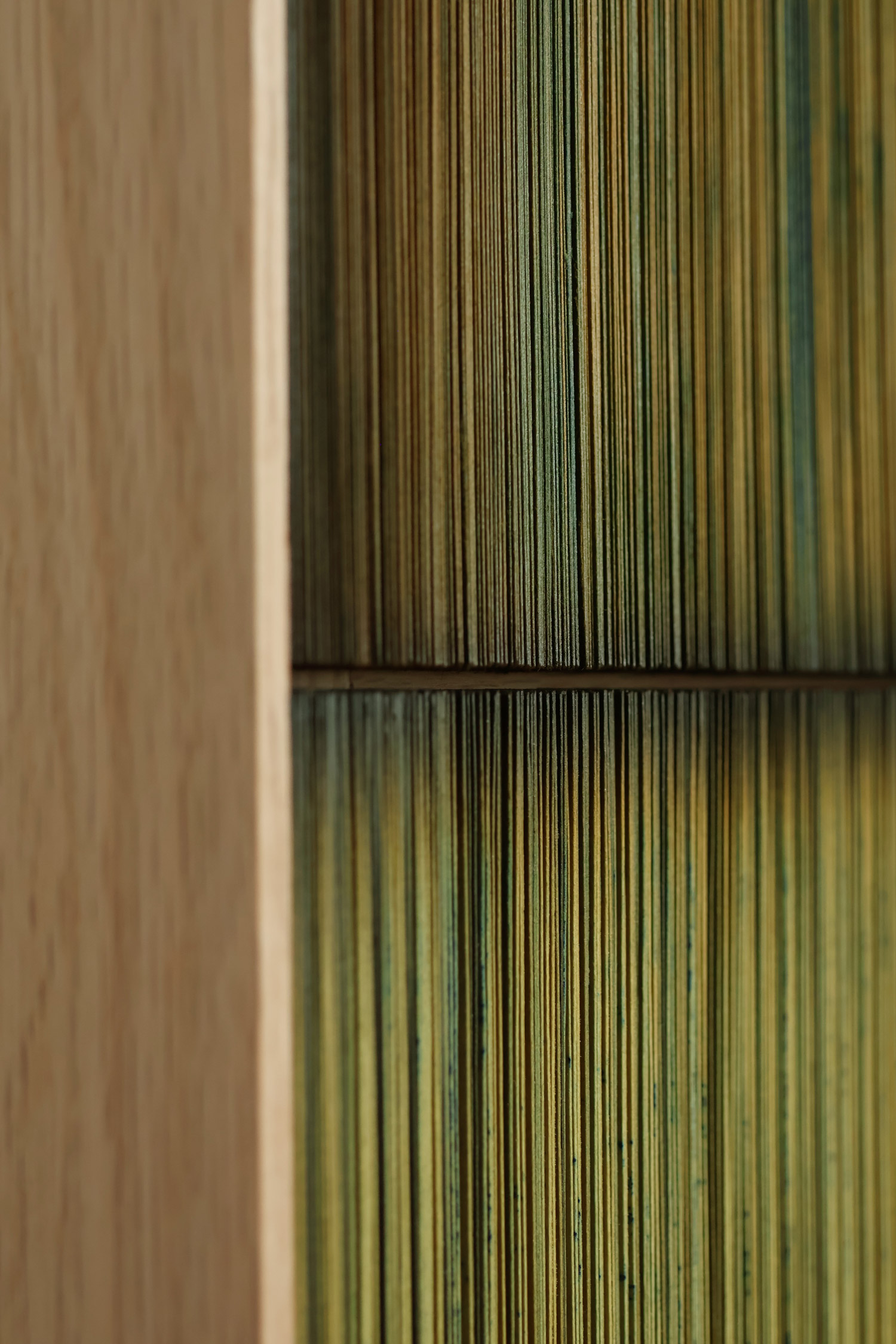
You cut and assemble thousands of strips of dyed blotting paper with remarkable precision and patience. Can you tell us more about this process and the dialogue that unfolds between you and the material?
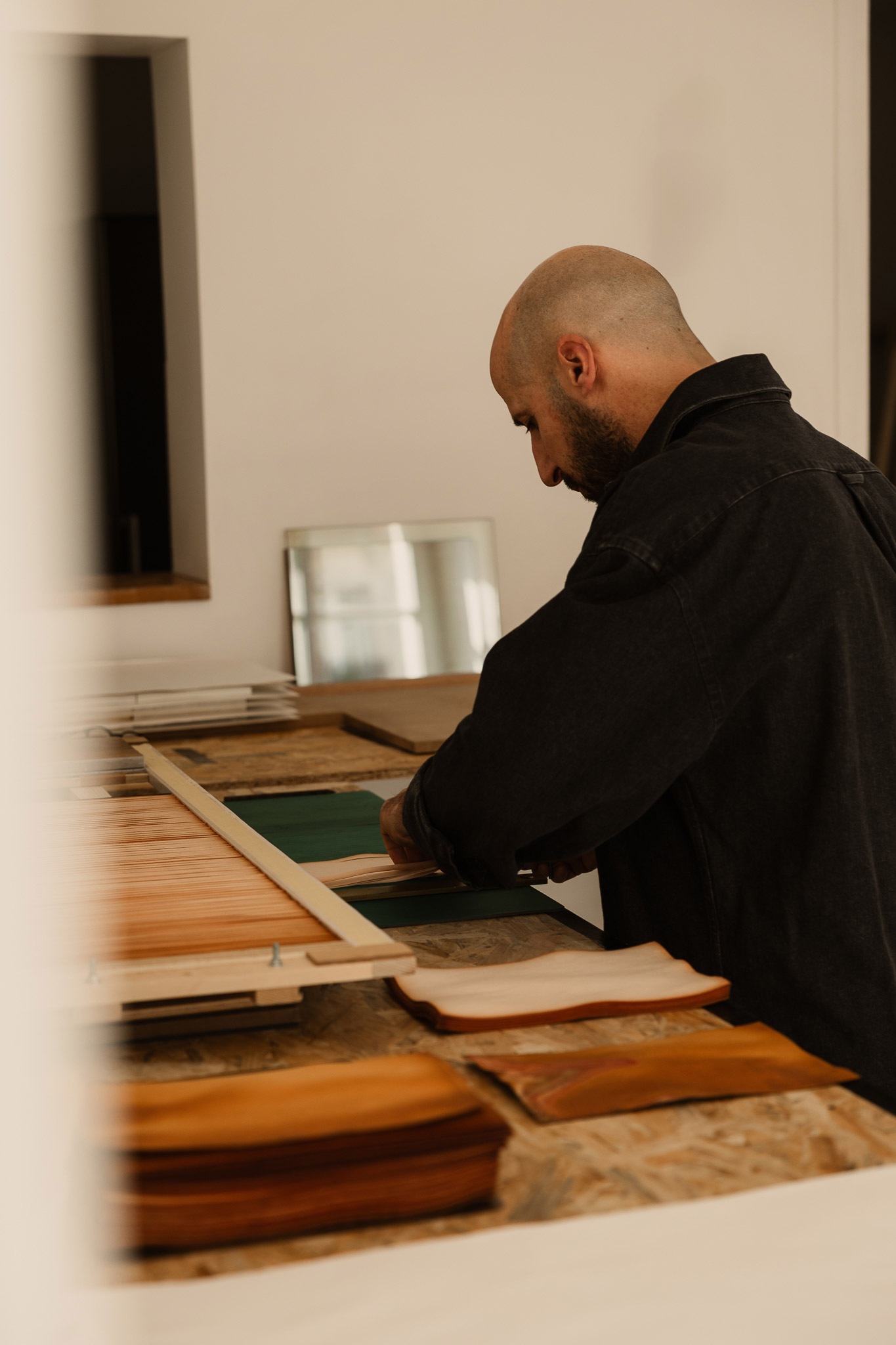
Out of respect and self-effacement, I try to sublimate the material as best I can—I take care of what it offers me. When I start cutting, the paper has dried for 3 to 6 months beforehand, and only then do I discover what it will give me. I follow the path of the material. During this stage, I am side by side with the medium; it feels like walking—I’m caught between introspection and landscape.
I follow the path of the material. During this stage, I am side by side with the medium; it feels like walking—I’m caught between introspection and landscape.
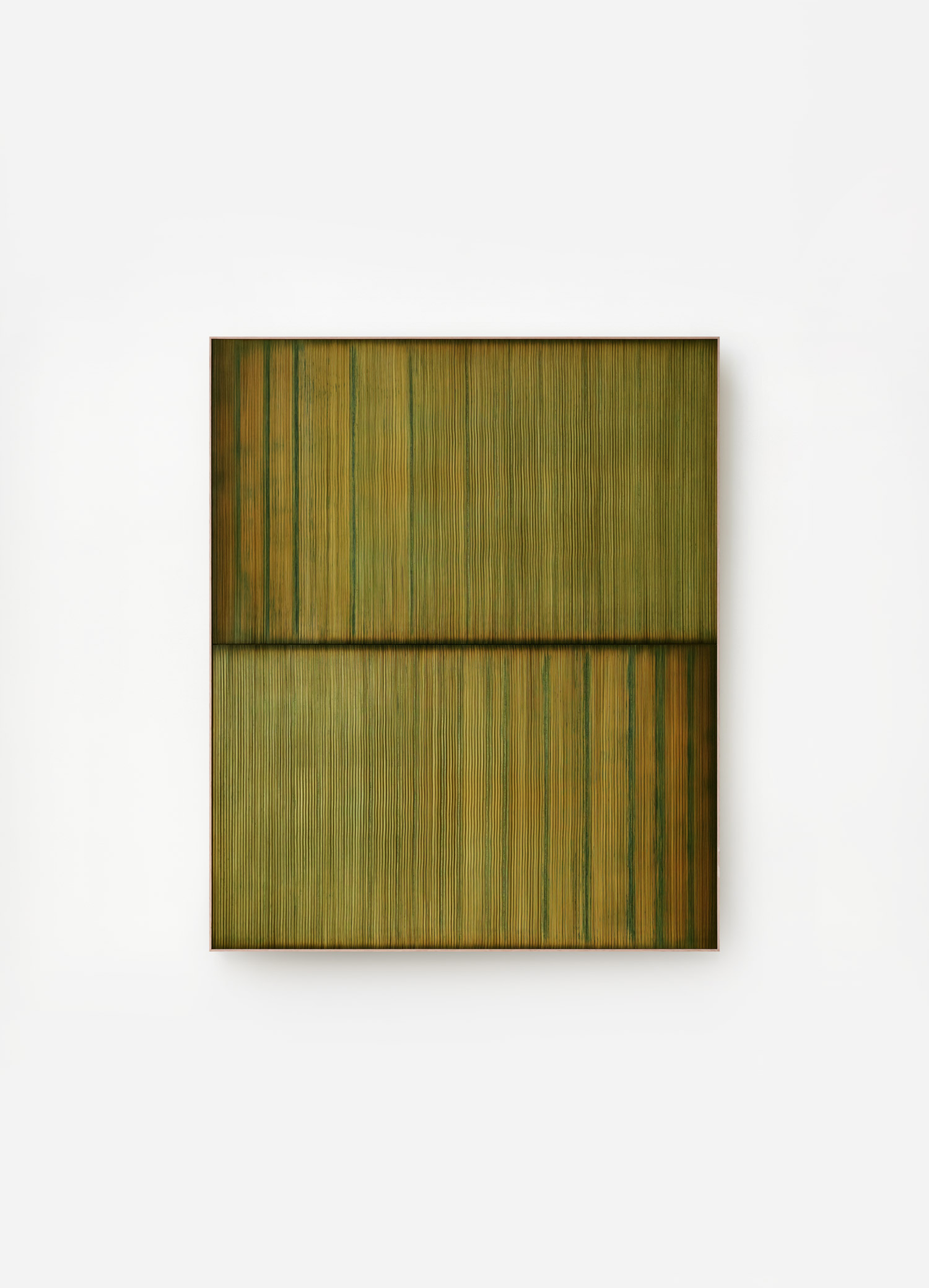
How much of yourself, your emotions, and personal experiences are reflected in your art?
I would say 100%.
Your works are constantly affected by light, air, and time. Do you ever consider a piece to be truly “finished”? And what does this ongoing transformation mean to you personally as an artist?
There is no finitude in my work. If I consider that there is life within the material, I cannot stop the process—otherwise, I am going against my very approach. I cannot interrupt life when my goal is to make it visible.
Many artists are hesitant to use the term “minimalist” to describe their work. What about you? Would you describe your works as minimalist?
Some people tell me it’s Minimal, and I accept that.
There is no finitude in my work. If I consider that there is life within the material, I cannot stop the process—otherwise, I am going against my very approach. I cannot interrupt life when my goal is to make it visible.
Your works have a calming, almost hypnotic effect. Is there a particular feeling that you want to evoke in the viewer?
Intensity.
And finally: What are you currently working on, and what are your plans for the future? Could you imagine using a different medium instead of blotting paper?
Right now, I’m working on pieces that explore questions about fluid mechanics. Science holds a virtue of truth, so I’d like to create a correlation with my artistic approach. I also want to experiment with the principles of monadology according to Leibniz, because his vision is extremely stimulating.
And I want to meet people, places, cultures—to exchange perspectives and interact! In that sense, yes, I’m thinking about developing my work with mediums other than paper, and that’s why conversations are so important.
Thank you so much, Jean Philippe!