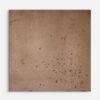
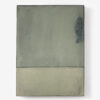
How little can you do and still remain fully engaged? For Icelandic artist Steingrímur Gauti (b. 1986), this question shapes his perspective on painting. Working from his studio in Reykjavík, Gauti creates abstract works through layering, repetition, and attention to surface and material. Often working in muted, nearly monochrome tones, his paintings unfold slowly, carrying a quiet but striking physical presence. What drives him is not the reduction of form, but the reduction of imposed meanings.
His work has always been abstract, but over time it has settled into something quieter – more reduced, more attentive to the weight of small decisions. His interest lies in presence: the energy a painting can hold and the space it can open for the viewer. In recent years, Zen has deepened his relationship to the creative process. Painting becomes a daily practice, a steady, unforced exchange between his body, the material, and the moment.
In our conversation, Gauti takes us into his studio and describes a process that unfolds in stages, each one flowing into the next, moving between action and response, intuition, and sometimes deliberate disruption. We also talk about his path from architecture to painting, the questions that shape his practice, and what he hopes viewers encounter when standing before one of his paintings.
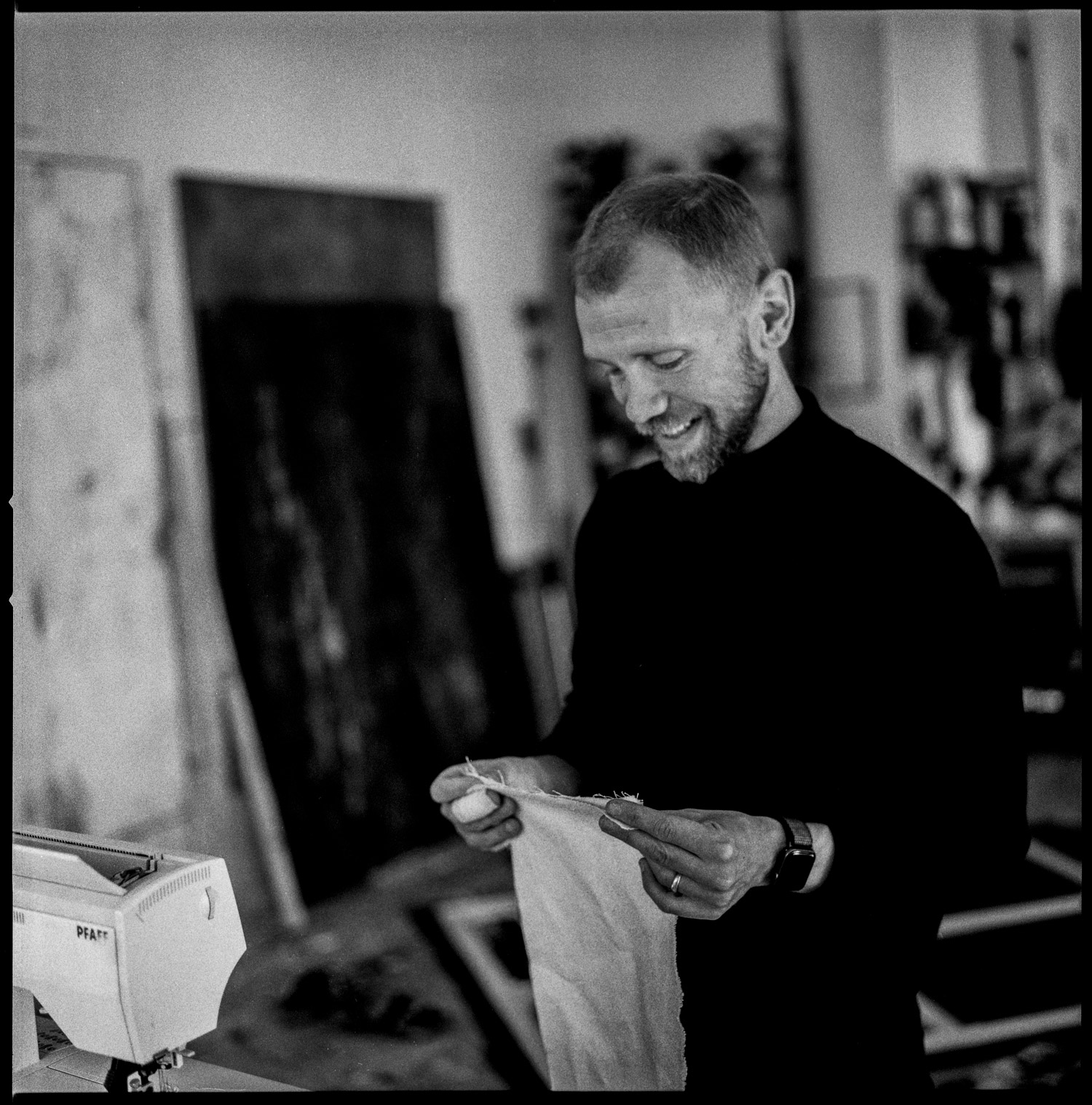
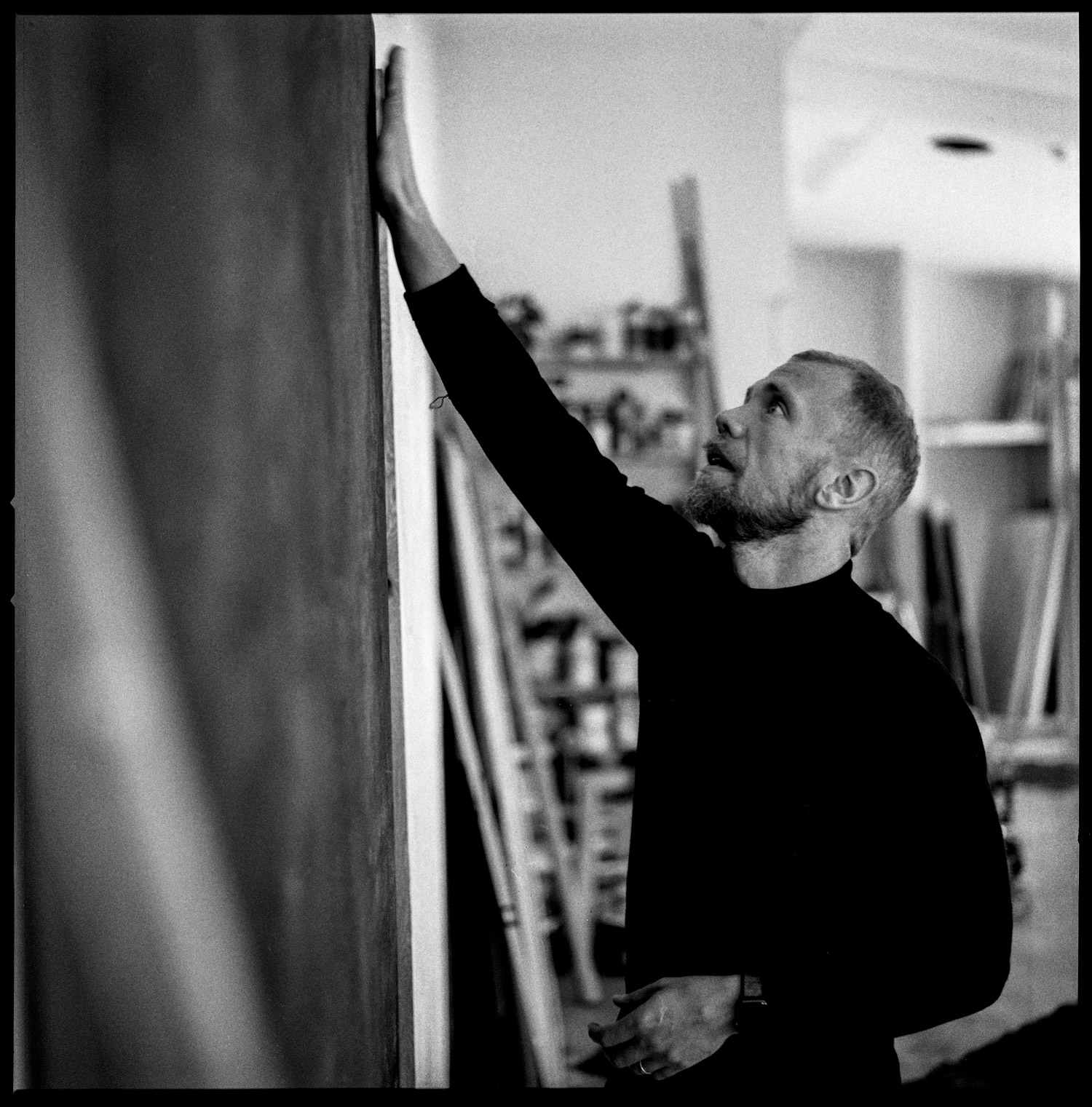
Steingrímur, please tell us how your artistic journey began. You initially studied architecture — what made you become an artist instead?
My path into painting was not entirely linear. I came into my foundation year at art school with the idea of going into architecture, and I still feel close to that way of thinking — the sensitivity to space, structure, and proportion has never really left me.
At my core I have always been quite goal-oriented. I come from a background in sports and was used to setting clear plans and working steadily toward them. Architecture fit naturally into that mindset, and for a long time I assumed that was the direction I would follow.
But life has a way of interrupting even the clearest plans. During my preliminary studies, almost by accident, I made a last-minute decision that pulled me toward art instead. Looking back, many of the most meaningful things in my life have arrived that way — not through strict planning, but through moments of deviation and surprise.
As a child I was always drawing and making things, but I didn’t really understand that being an artist could be a life or a profession. It wasn’t until I was around twenty that I became seriously interested in painting. At that time I was deeply drawn to the energy of the “new painting” — abstract expressionism, Basquiat, graffiti, Twombly, Baselitz, the Neue Wilde — this raw, physical, reckless momentum. For a wandering mind, that kind of work is a very powerful gateway.
That directness is what first pulled me fully into painting. Compared to that, architecture at the time began to feel increasingly bound to problem-solving and external constraints. Painting offered something more immediate and bodily — a space where I could act first and understand later.
I should say that my interest in architecture never really disappeared. It remains one of my main interests to this day, although now more as a lay observer than as a practitioner. The sensitivity to space, structure, and proportion still quietly informs how I approach painting — especially in how I think about surface, balance, and the physical presence of the work.
How has your artistic style evolved to this day? Have your paintings always been abstract?
My work has been abstract for most of my serious practice, but my relationship to abstraction has definitely evolved over time.
Early on, I was very drawn to gestural painting and to working at a large scale. I was fascinated by the physicality of it — how the body could move across the surface, and how much room there was for experimentation and for error. Scale became a crucial part of the dynamic. There are things that happen in large paintings — in terms of rhythm, movement, and spatial tension — that simply don’t translate easily into smaller work.
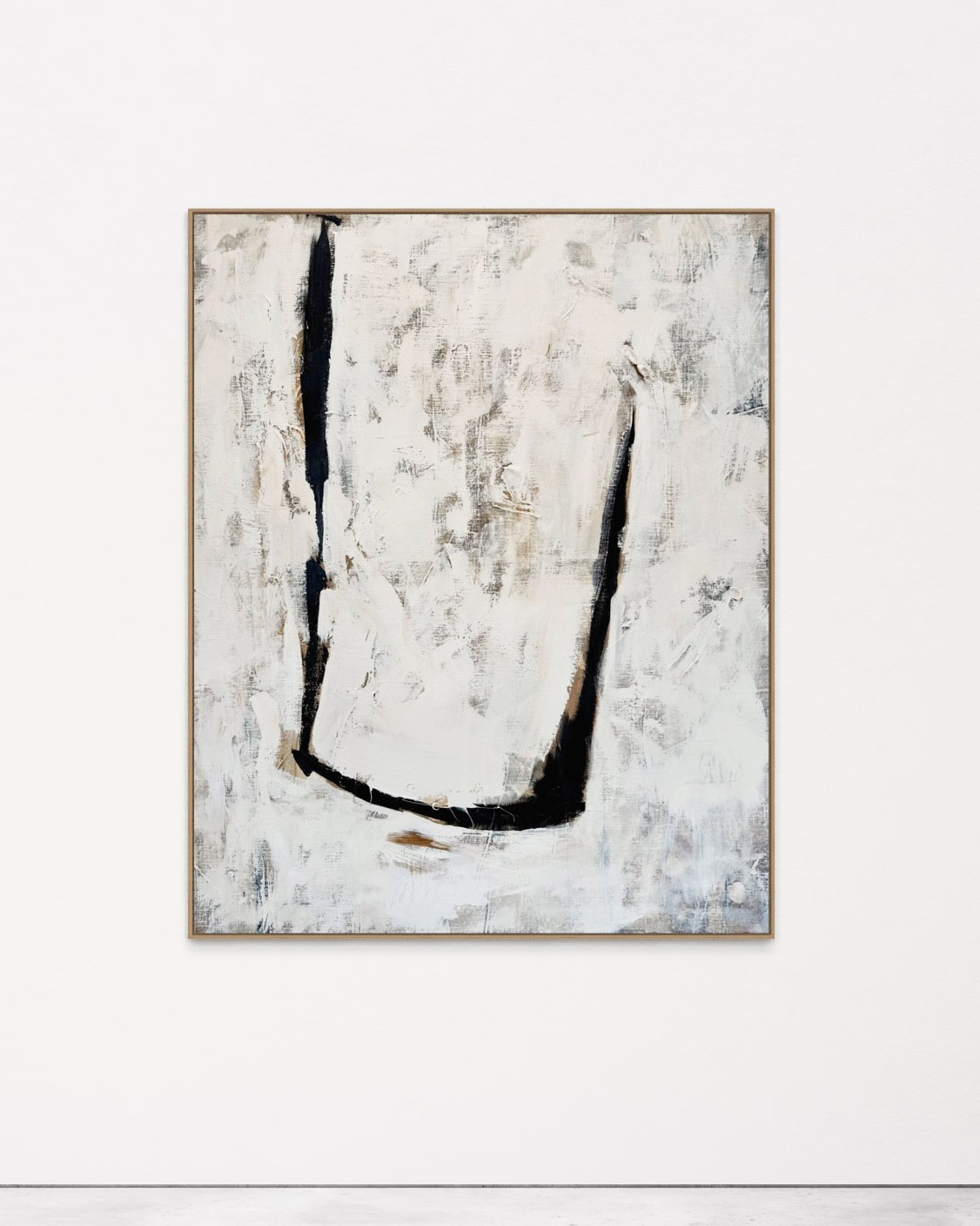
Over time, though, the work has gradually become quieter and more reduced. I’ve grown more interested in restraint, repetition, and in allowing smaller shifts to carry more weight. My palette has also become more subdued and earthbound. I find myself increasingly drawn to paintings that don’t immediately declare themselves but unfold slowly through sustained attention.
Interestingly, as the work has become more subtle, I’ve also felt a growing pull toward smaller formats. Subtraction tends to translate very clearly at a more intimate scale. At the same time, I’ve become increasingly interested in how smaller works can function collectively. I recently completed a series of thirty small paintings that speak quite loudly as a whole, while each individual work is closer to a whisper on its own.
These days I often find myself asking: how little can you do and still remain fully engaged? In many ways, that question mirrors how I try to live and work more broadly. The paintings have remained abstract, but the temperature of the work has cooled — or perhaps simply settled into a different kind of attention.
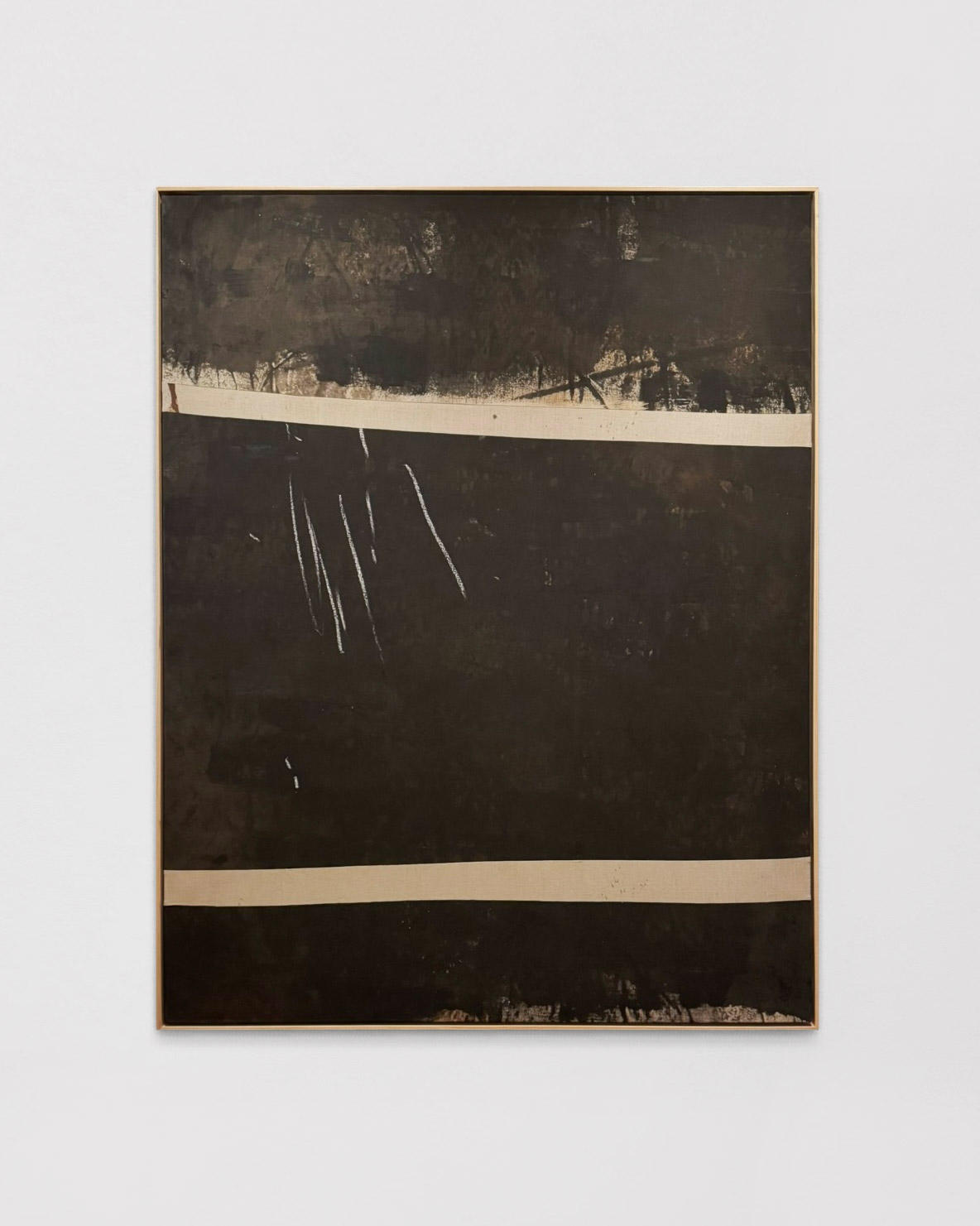
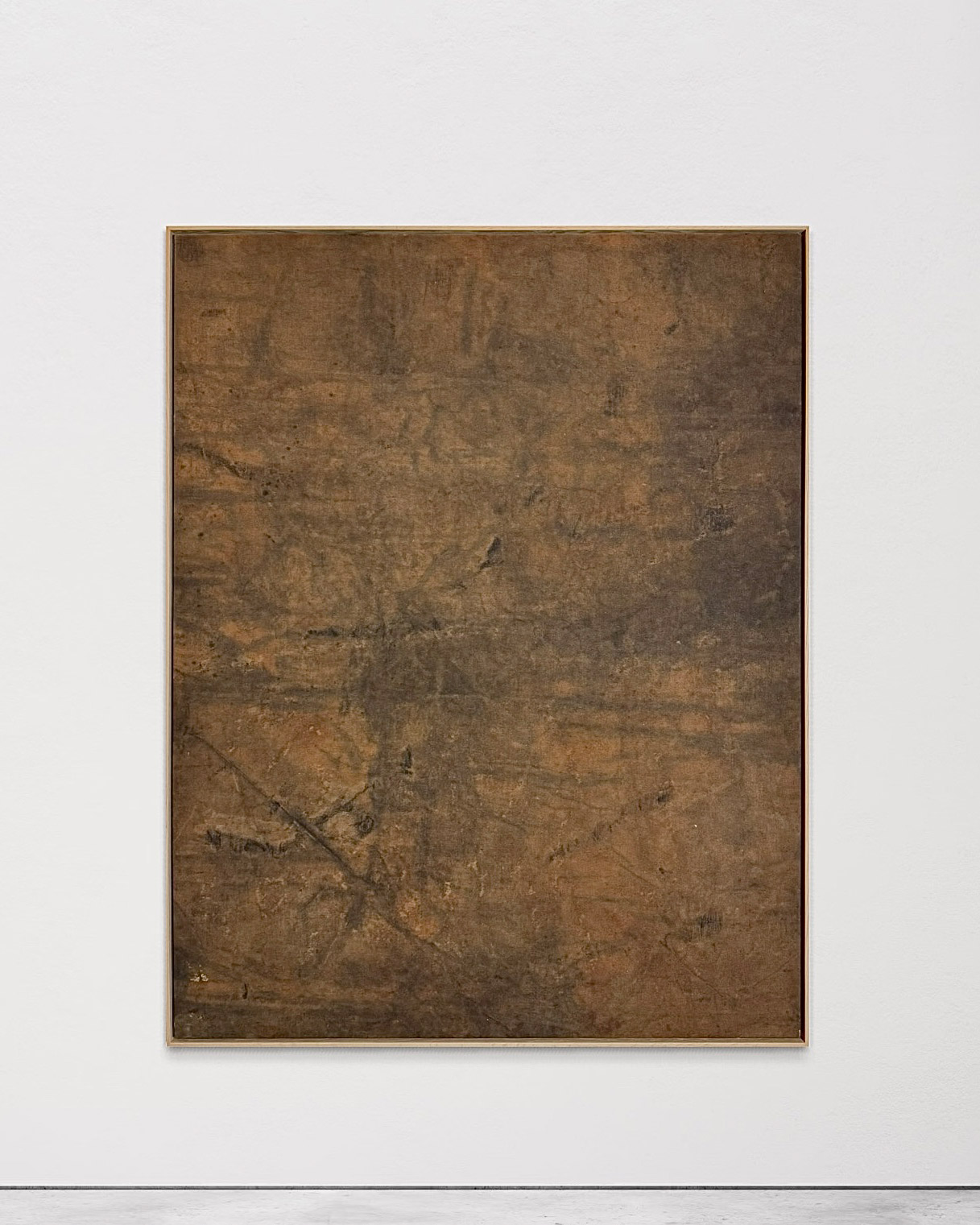
You practice Zen. How has your art changed since you delved deeper into Zen? And what role does the concept of intentionlessness in the creative process play for you?
Practicing Zen hasn’t really changed my work stylistically so much as it has changed my relationship to painting.
From the outside, Zen can seem very strict and direct — and in some ways it is. But when you stay with it, there is also a surprising lightness. Over time I’ve learned not to take things quite so seriously, and not to be so fixed on specific outcomes. I’m more willing now to let the work become what it becomes.
Earlier on I was more preoccupied with whether a painting was working or where it might lead. Through practice there has been a gradual softening. I’m less interested in imposing a strong will onto the painting and more interested in setting the conditions where something can emerge.
At the same time, the discipline at the core of Zen has been very helpful in the studio. This life is really about showing up and doing the work, day after day — especially when you don’t feel like it. The practice supports that continuity.
Spending time in Japan and encountering ideas through figures like John Cage also reinforced this way of thinking — a trust in process, in chance, and in allowing things to unfold without forcing them.
For me, intentionlessness does not mean passivity or carelessness. It’s more about loosening excessive control. There is still structure and many decisions being made, but ideally they come from close attention rather than from forcing an idea through. I also notice that I’m more mindful now in how I handle materials, and more aware of the history that painting carries.
At its best, painting feels very close to sitting: simple, direct, and complete in itself.
What connection do you see between (minimalist) art and meditation?
I should say first that I don’t really think of my work as minimalist in a strict sense. What interests me is less about reducing the work to a minimal form and more about reducing the amount of imposed meaning around it.
That said, I do see a clear point of contact between certain forms of reduced painting and meditation. Both rely on a kind of trust in reduction. By removing the unnecessary, perception itself can become more vivid.
Through meditation, I’ve experienced how the field of awareness can gradually widen. There is often a real sense of increased spaciousness and lightness that comes with sustained practice. I do feel that this shift has translated into the paintings — not as an illustration of meditation, but more in the overall atmosphere and openness of the work.
Both practices also ask something of the viewer or the practitioner. The work doesn’t try to overwhelm you with information or direct you toward a fixed reading. Instead, it creates a quieter space where your own presence becomes part of the experience.
I’m interested in that shared territory where very little appears to be happening on the surface, but quite a lot may be unfolding in perception.
I find myself increasingly drawn to paintings that don’t immediately declare themselves but unfold slowly through sustained attention.
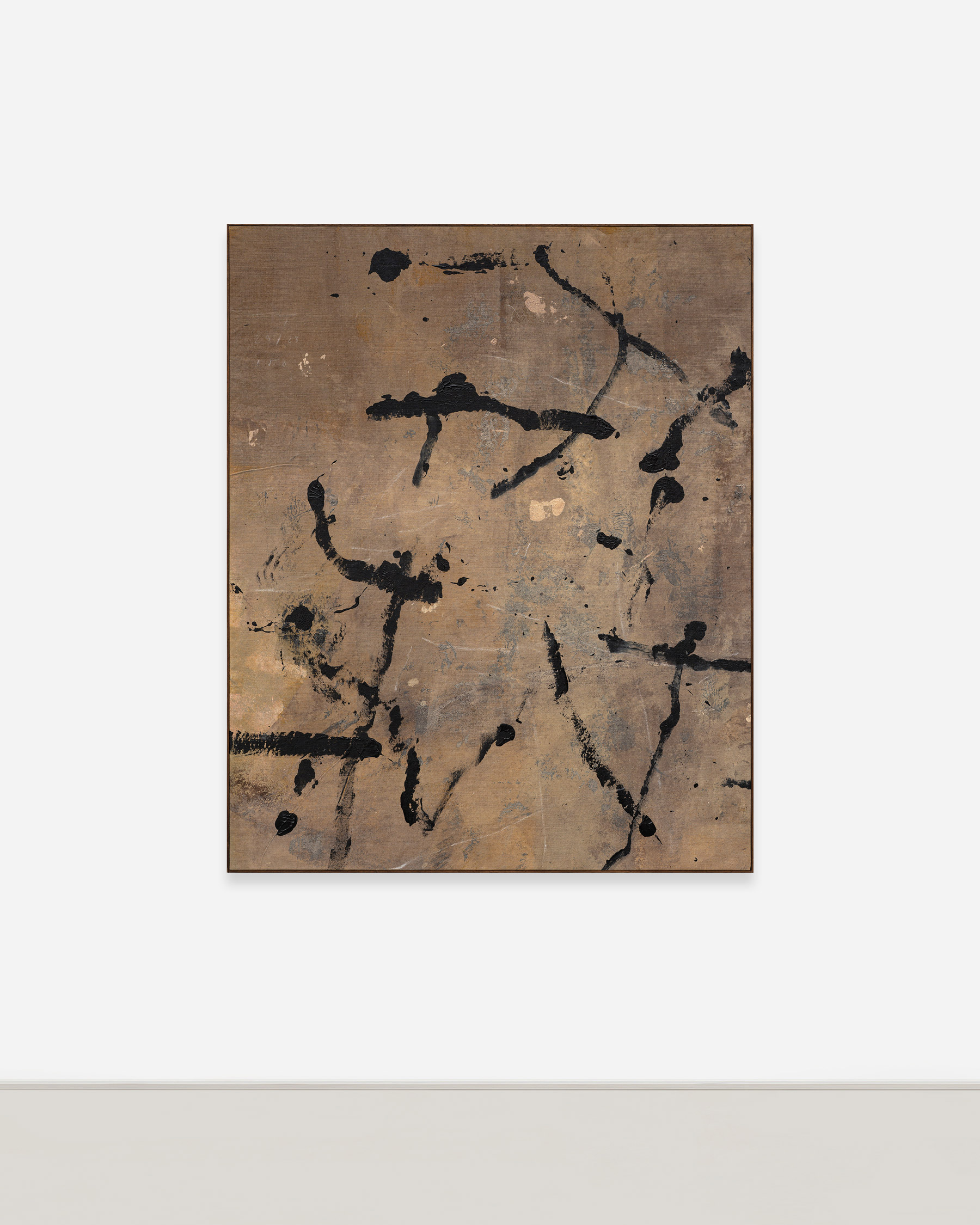
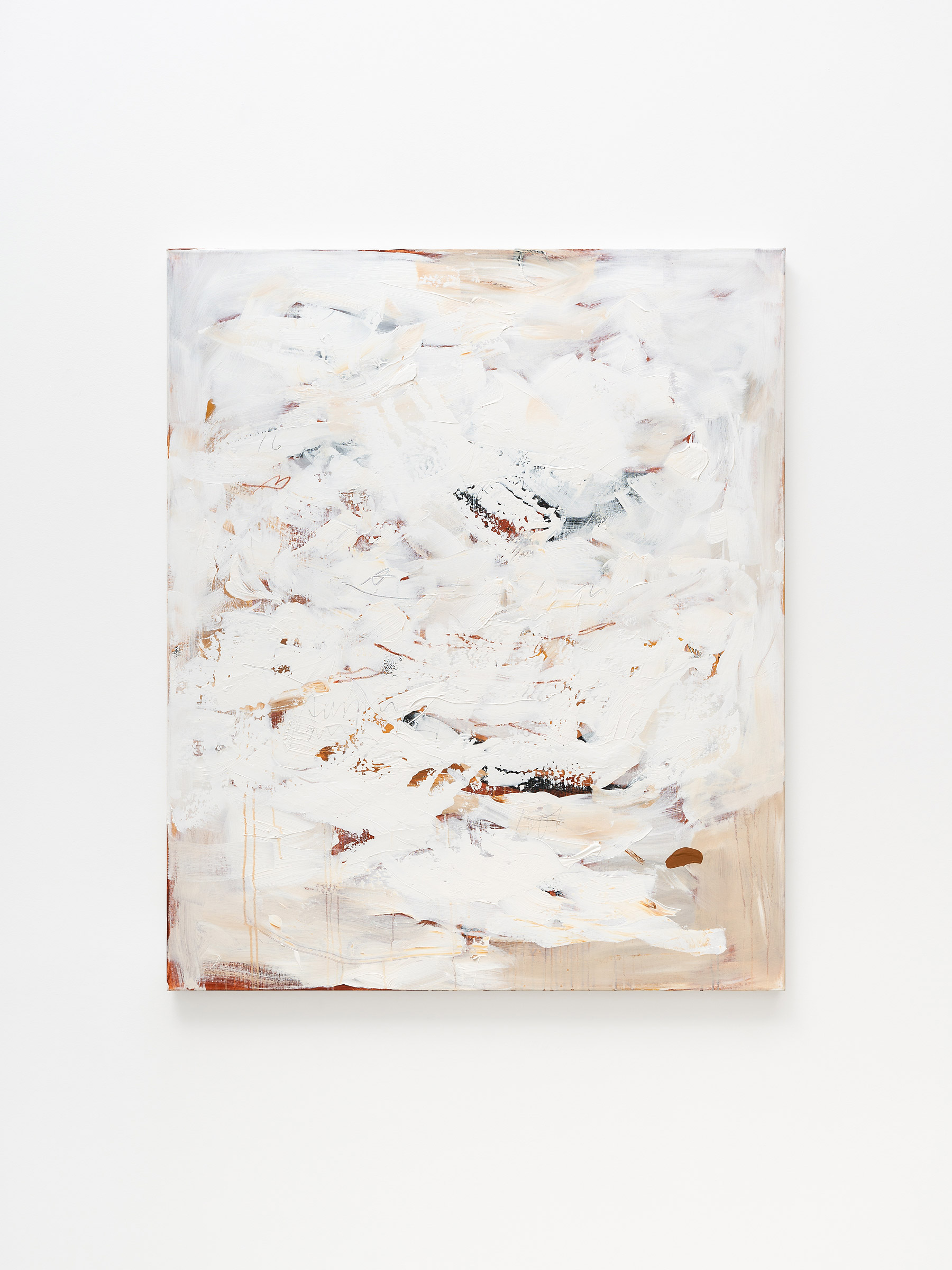
Please take us into your studio and tell us a bit about your process — from the first gesture to the finished painting. How do you distinguish between intuition and what is controlled more by your mind or ego while painting?
My studio routine is quite steady, and the work usually begins very simply. I work on unstretched raw canvas and linen directly on the floor, often layering multiple pieces — for example, two layers of canvas and two layers of linen. I only work on the top layer, but what interests me just as much is what happens underneath. On the backside of the fabric, these “ghost” images and unintentional drawings begin to appear, and they often become the starting point for the next painting.
That process raises a lot of questions for me — whether I’m really making the work, or simply allowing it to happen. There’s a constant back-and-forth between action and response.
After this initial phase, I usually stretch the painting and continue working on the wall. At that point the work shifts slightly — it becomes more about adjusting, refining, and sometimes disrupting what is already there.
Material has always been important to me. When I was in art school, I used to sew leftover canvas together simply to make use of it, and I’ve carried that hands-on approach with me. In recent years I’ve been cutting works apart and sewing them back together — front side, back side, mixing fragments — whatever keeps the process alive. I’m drawn to that tactile engagement and to the element of surprise it brings into the work.
I don’t usually start with a fixed image in mind. The painting develops through a kind of dialogue — responding to what is already there rather than trying to impose something onto it. In that sense, the work is less about arriving at a specific result and more about staying in relation to the surface.
Because of that, I don’t really think in terms of mistakes. What might initially feel like something going wrong often just opens a different direction. The work tends to move forward through those moments rather than despite them.
As for intuition and control, I don’t experience them as completely separate. There are always decisions being made. But I’ve learned to notice the difference in how those decisions feel. When I’m trying to force something — to fix the painting or make it “work” — it often becomes tighter and less alive. When things are moving well, the decisions feel quieter and more direct, almost obvious.
So the process becomes one of paying attention and adjusting — not removing control, but softening the need to dominate the outcome.
A painting is finished when it no longer asks for anything more — when any further intervention would feel unnecessary or too deliberate. That point is not always easy to recognize, but it’s usually quite clear when it arrives.
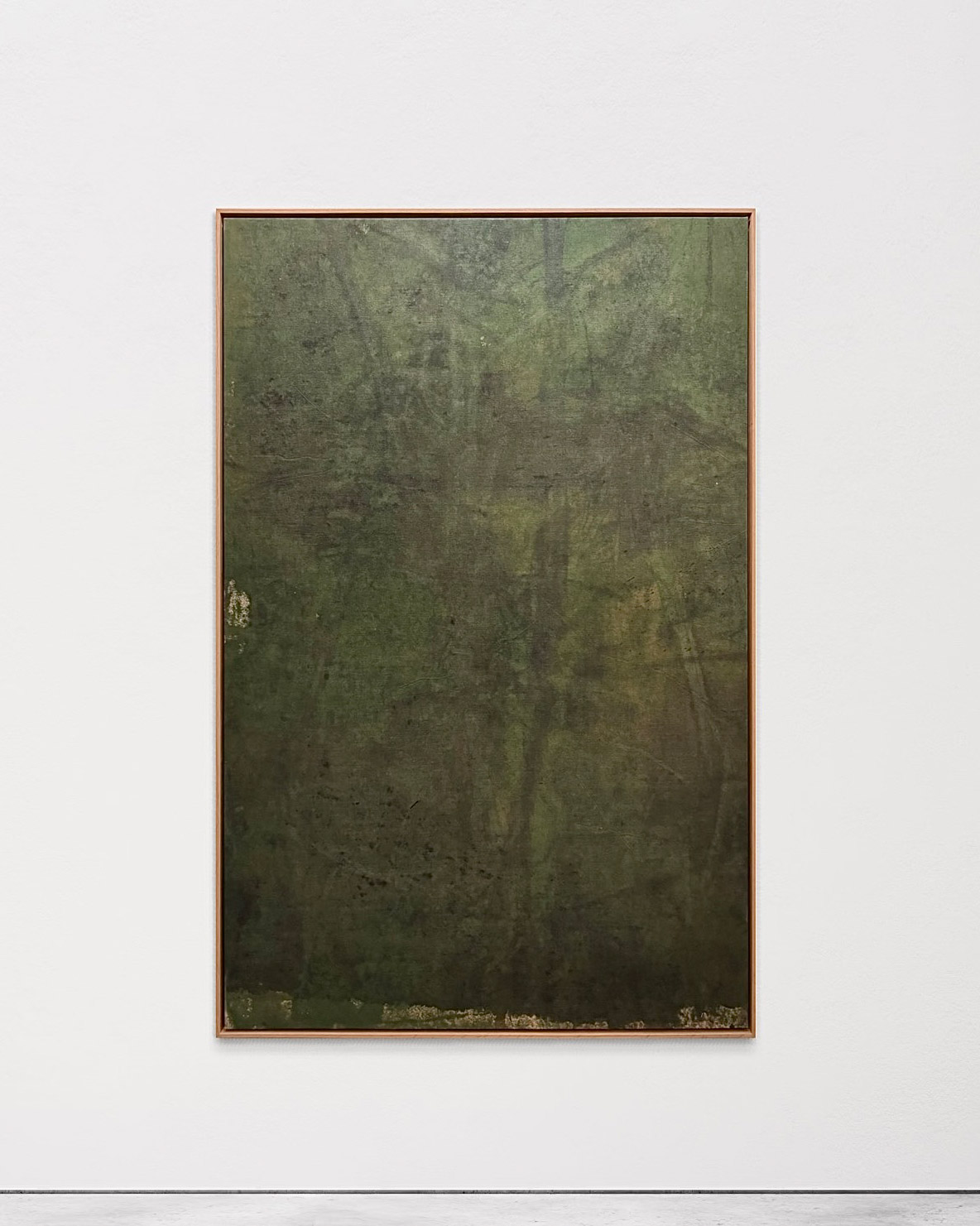
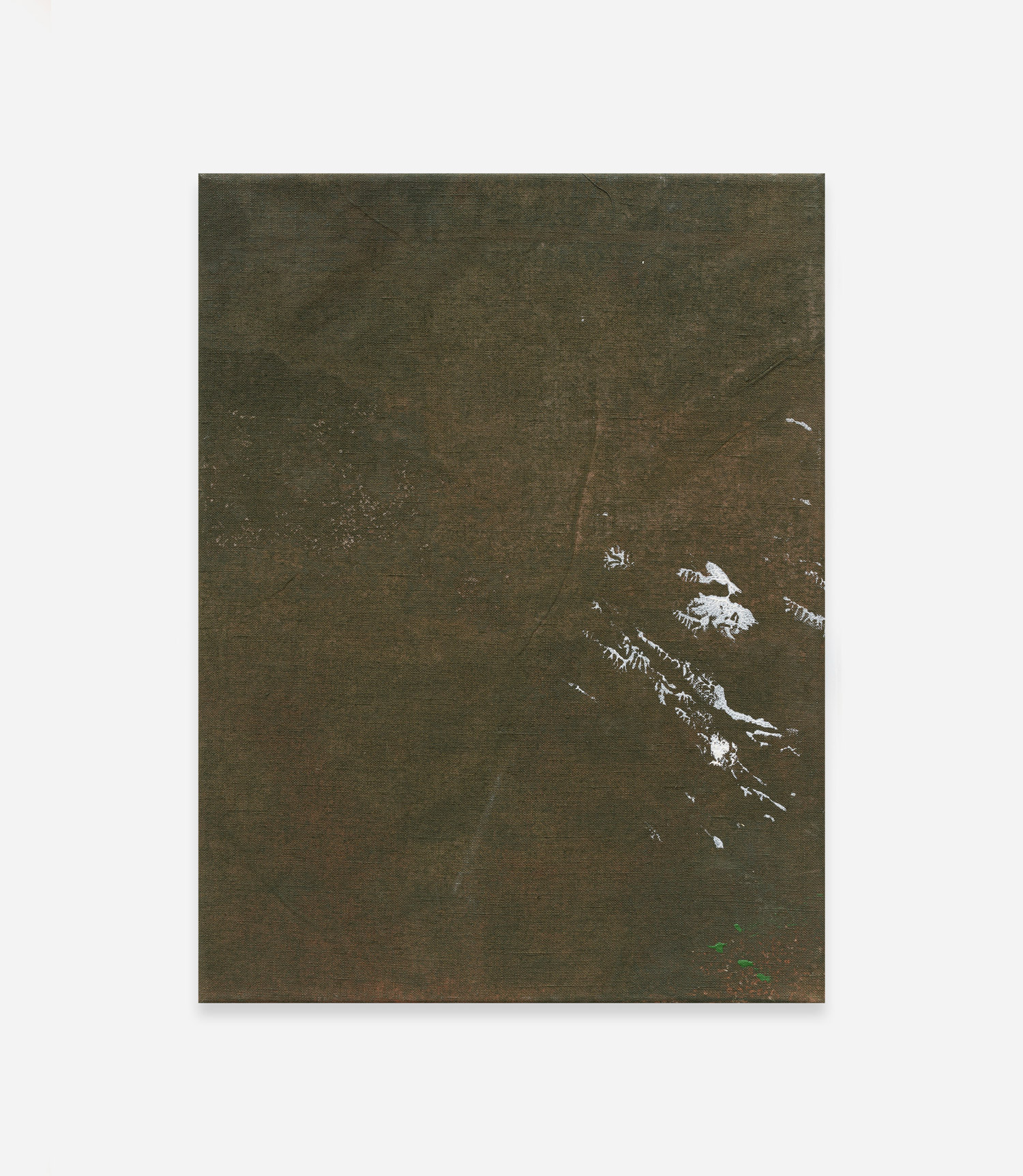
Has the intellectual understanding of a piece ever changed the way you approach the next one?
Yes, I think it has — but usually with some distance.
I try not to analyze the work too much while I’m in the middle of it, or even immediately after. It needs some time to stand on its own before I begin to reflect on it. If I move too quickly into interpretation, it can close things down or make the next work feel overly directed.
With a bit of space, certain patterns or tendencies become clearer, and that can shift how I approach the next paintings. But it’s not so much about understanding a specific meaning as it is about noticing what keeps returning.
Often I find that I need to make a whole group of related works to really settle into a certain rhythm or feeling. I work in a fairly familiar way, so I usually recognize the steps that allow something to emerge. The individual paintings might look quite different, but to me it often feels like I’m making the same work over and over again, just approached from slightly different angles.
In the end, the more important questions tend to be quite simple: Why do I feel the need to make this kind of work at all? What draws me to it? And who, if anyone, am I really making it for?
Those questions don’t necessarily have fixed answers, but they keep the process honest and moving forward.
You once said that you are interested in expressing some basic forms of human emotions. What do you hope people experience when they stand in front of one of your paintings?
For me, it has less to do with specific emotions and more to do with the kind of energy that goes into the work.
I have a strong sense that whatever you bring into the process — your attention, your state of mind, your presence — it carries through into the painting, into the space, and ultimately into the experience of the viewer. It’s not something I try to control directly, but I do feel a responsibility toward it.
So I’m not thinking in terms of “this work is about love” or “this one is about something else.” It’s more open than that. I’m interested in where things come from — how an idea or a feeling takes shape, and how it can be translated into something material and shared.
In that sense, making a painting is a way of taking something internal, often quite undefined, and allowing it to exist in the world. That movement — from something felt to something seen — is probably what draws me most to making art.
For the viewer, I don’t hope for a specific reaction. But if the work can hold a certain presence — something that feels real, even if it’s quiet — then it can open a space where people can meet it in their own way.
The painting develops through a kind of dialogue — responding to what is already there rather than trying to impose something onto it.
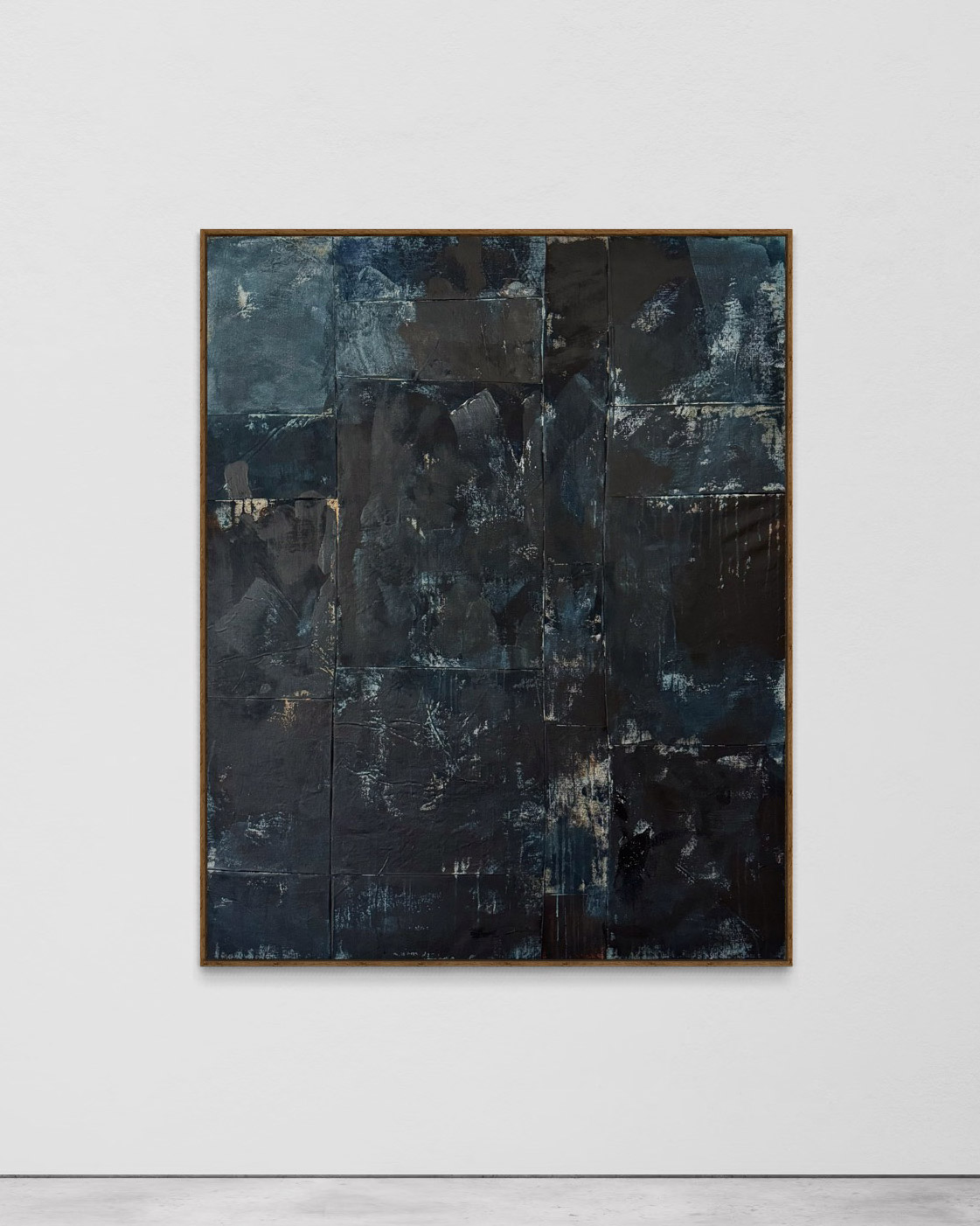
And finally: What are you currently working on, and what are your plans for the future?
At the moment I’m continuing to work in the studio on a group of paintings that build on the processes I’ve been developing over the past few years. It feels less like a shift in direction and more like a deepening — staying with the same questions and allowing the work to evolve gradually.
Alongside that, I’m working on a small book that brings together images of the paintings, along with photographs and short fragments of text. I’m interested in how the work can exist in that format as well — in a quieter, more intimate way.
In terms of exhibitions, I’m currently preparing for a solo show at Gallery Gudmundsdottir in Berlin this November, along with a few other upcoming projects. I’m also increasingly interested in how paintings can function together as a kind of extended field rather than as isolated pieces.
Looking ahead, my focus is simply to continue working steadily. I’m not so interested in making big shifts, but rather in staying close to the process and letting the work develop at its own pace.
The days are getting longer again, the light is returning — it feels like a good moment to be working.