There are exhibitions I anticipate with special excitement. Not only because new works will be on view, but because they evoke something in me that goes well beyond the act of looking. John Zurier’s show along – between at Galerie Nordenhake was exactly that kind of show. Before the opening, I also had the opportunity to interview the artist and learn more about his work, his thinking, and the pieces in this exhibition.
John Zurier, born in 1956 in Santa Monica, CA, is known for a kind of painting that resists any quick categorization. His works are frequently described as restrained and atmospheric – which is certainly correct. However, like so many such labels, this only comes close. What really distinguishes his art is less its formal reduction than the way in which it brings something fleeting and elusive to the surface, without ever fully capturing or defining it.
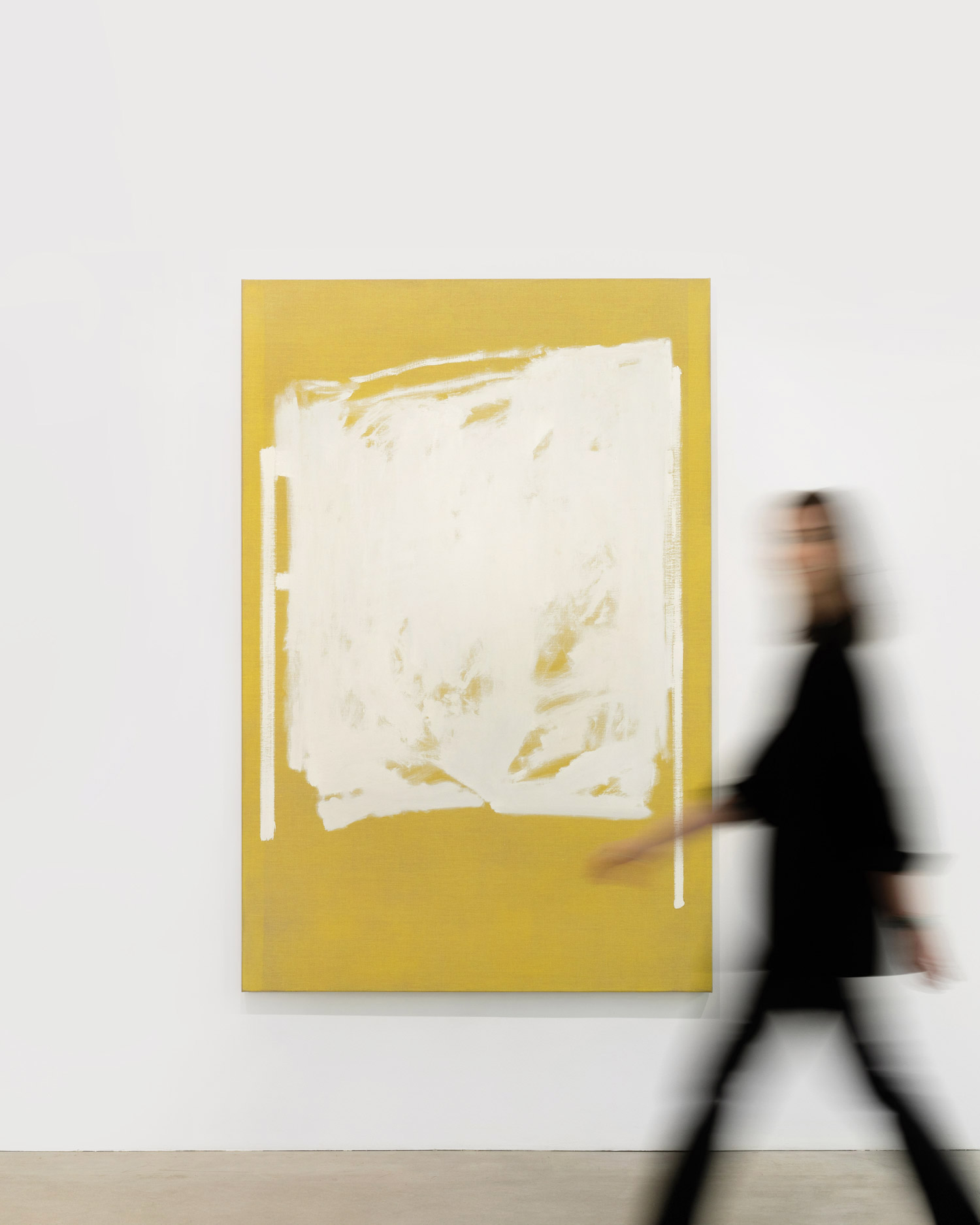
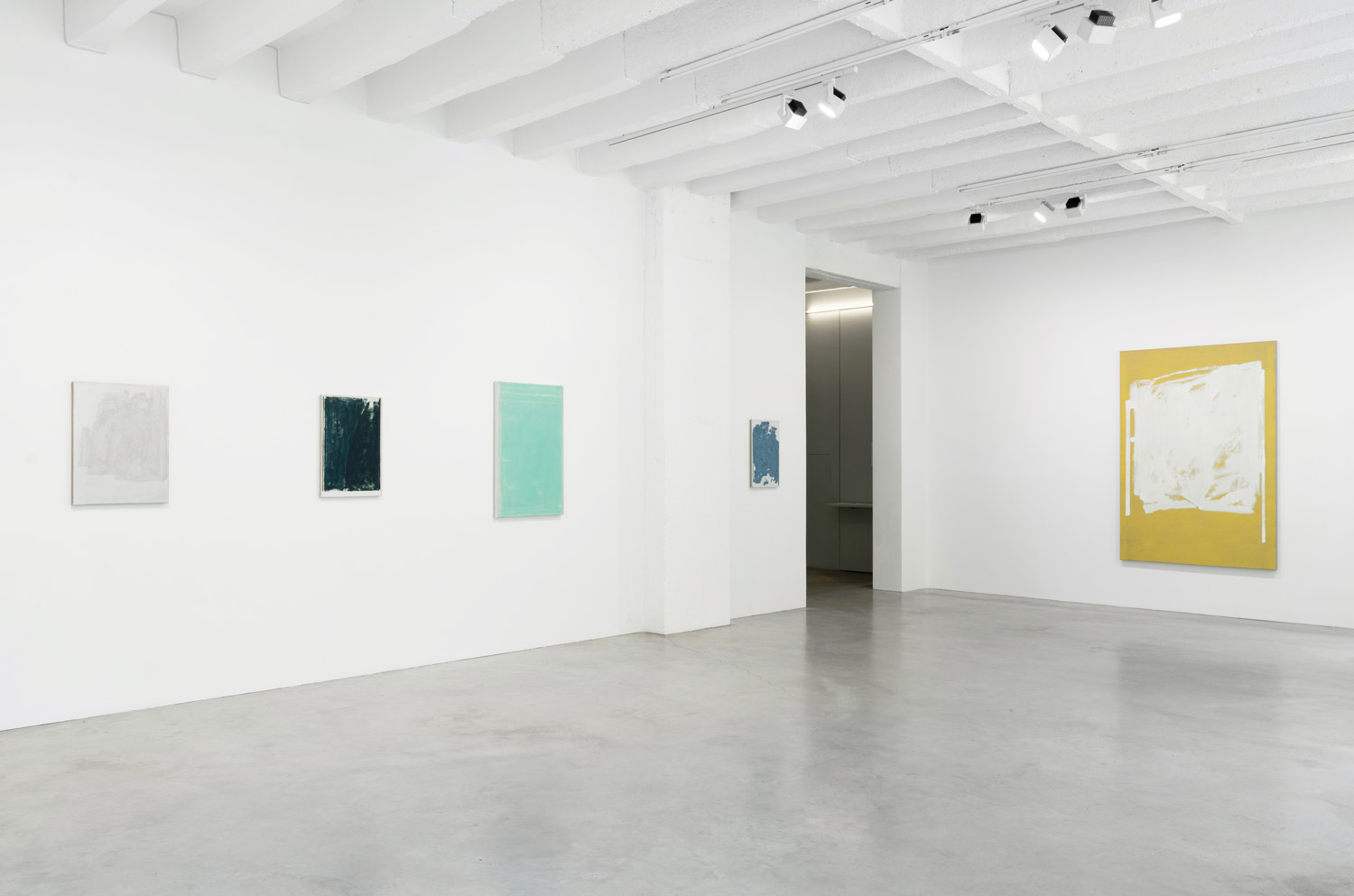
This becomes immediately apparent upon entering the exhibition. My gaze is instantly drawn to the largest work in the show: Sea and Mirror, a painting about two meters high in an intense, luminous yellow. A broad, irregular application of white paint lies over the yellow ground, never fully covering it but allowing it to show through in many places. Two narrow vertical strikes seem to hold the surface in place, giving it balance. In some areas, the white layer of paint appears as if it has been scraped away again; in others, as if the brush had been drawn across the surface with less paint. The longer I look at the painting’s surface, the more details begin to emerge – I notice small glittering particles running through the vivid yellow. I find it difficult to tear my eyes away from the work – there is something about it that carries the special stillness of that moment when the sun sinks into the sea.
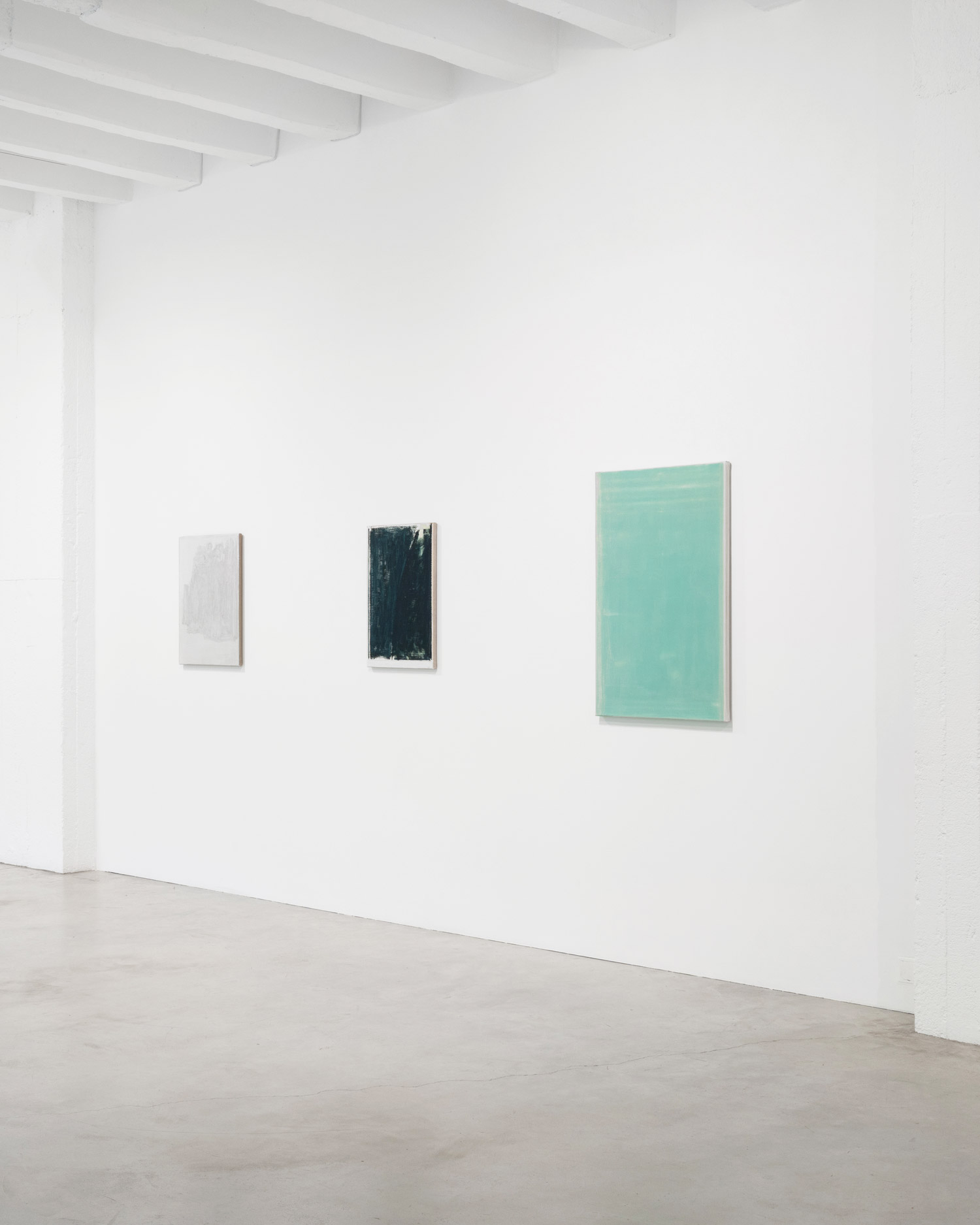
I continue walking through the space. In contrast to Sea and Mirror, I now encounter smaller works in muted, cooler tones. These pieces demand a different kind of attention from me. They feel restrained, inviting me to come closer. And here too, I recognize traces of the artist’s working process – areas where the movement must have been slow and expansive and others where the gesture was faster and more abrupt. It seems as though the paint has been pulled, perhaps scraped away again. The underlying paint never disappears completely but keeps pushing to the surface. Sometimes the entire canvas is painted, sometimes its texture appears, interrupted by individual impasto accents. All of these works seem to refuse any final state; they remain in the in-between. They carry something fleeting within them – something that slips away the moment one tries to define it.
And yet they emerge from a highly precise engagement with the material. I am fascinated by this contrast: how these tangible, physical materials allow the artist to approach the immaterial. John Zurier tells me that he likes working with traditional painting materials because of their limitations. They are “stubborn, simply themselves,” and that is exactly what he appreciates. They carry their own physical history as well as an art-historical weight. For him, the raw material is never merely a means to an end; it helps determine the creation of the painting.
These works carry something fleeting within them – something that slips away the moment one tries to define it.
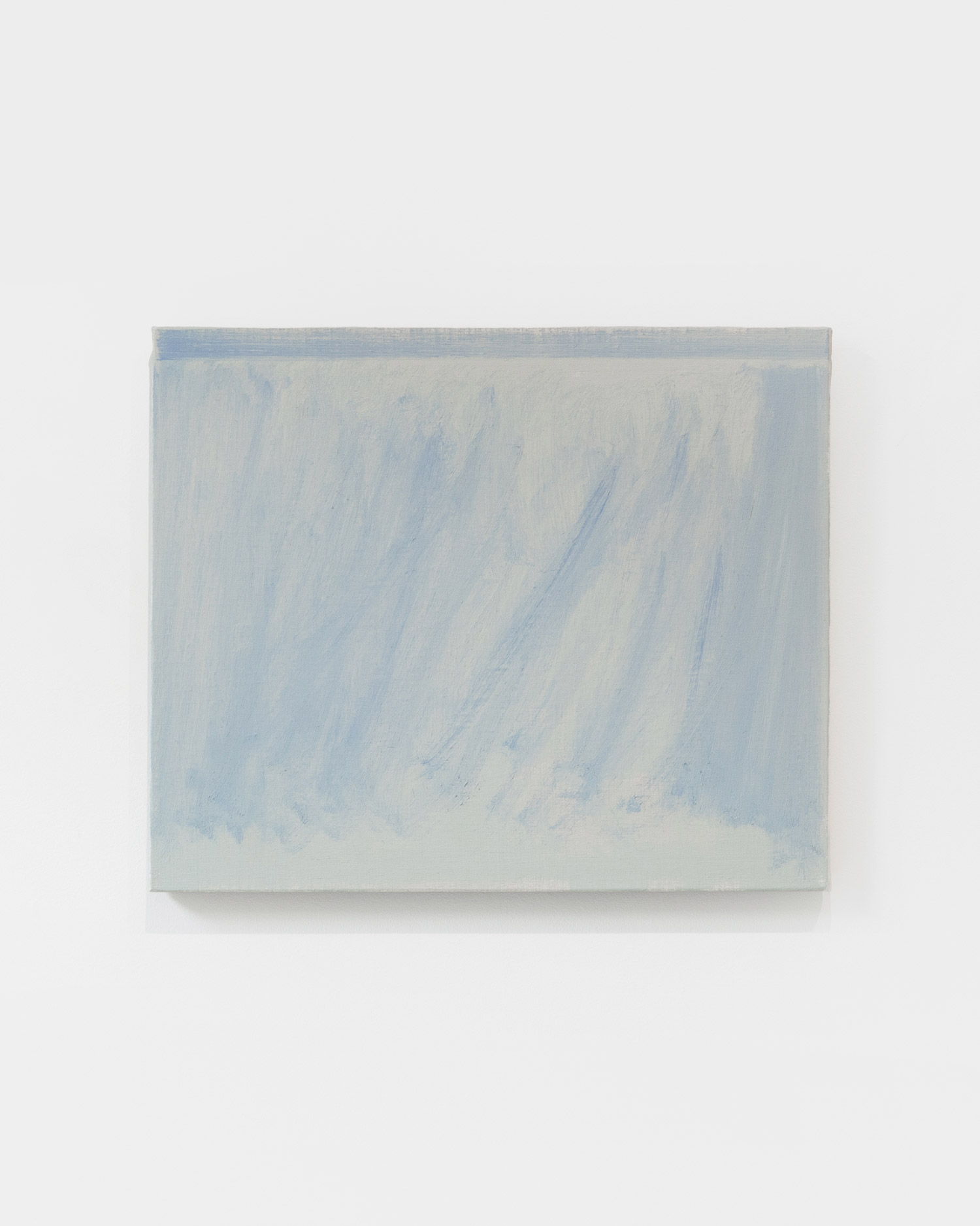
You can sense that in these works. The surfaces and materials are not merely carriers of a mood – they create it. And yet, this mood can never be fully grasped when looking at the work. Zurier himself describes this as a tension between two forms of perception: “One of the paradoxes of painting involves the difference between looking and seeing. Looking is like grasping, and seeing is what escapes the grasp. I want to preserve that tension by working in the gap between them.” Yet the artist is never concerned with depicting something concrete. He does not paint landscapes or weather phenomena, even though many titles evoke precisely such associations. Holding the Rain, Sea and Mirror, or April Earth evoke places, states, or weather conditions without directly depicting them. He tells me that most titles come to him only after the painting is finished. After many years, he has allowed himself to use “lyrical and poetic titles.” Often they come from poems. He likes it when a title “rhymes with the painting” – or better yet: “makes you feel the painting differently and the painting makes you feel the title differently”. In Holding the Rain, this is palpable. The title changes the way I look at it – the pale blue surface, with its soft brushstrokes, almost suggests rainfall while remaining just open enough to resist a fixed image.
During his creative process, he is less interested in control than in an interplay of attention and openness. When I ask him at what point his conscious material decisions give way to intuition and what role intentionlessness plays in this process, he replies that intuition is actually at work the entire time – even when he is acting very deliberately. “It could be that while I’m doing one thing, it allows for something else, the elusive or ineffable, to appear. In that way, intentionlessness is more like self-forgetting.” When painting, there is often a leap, a shift in seeing, that feels to him like “surrender.”
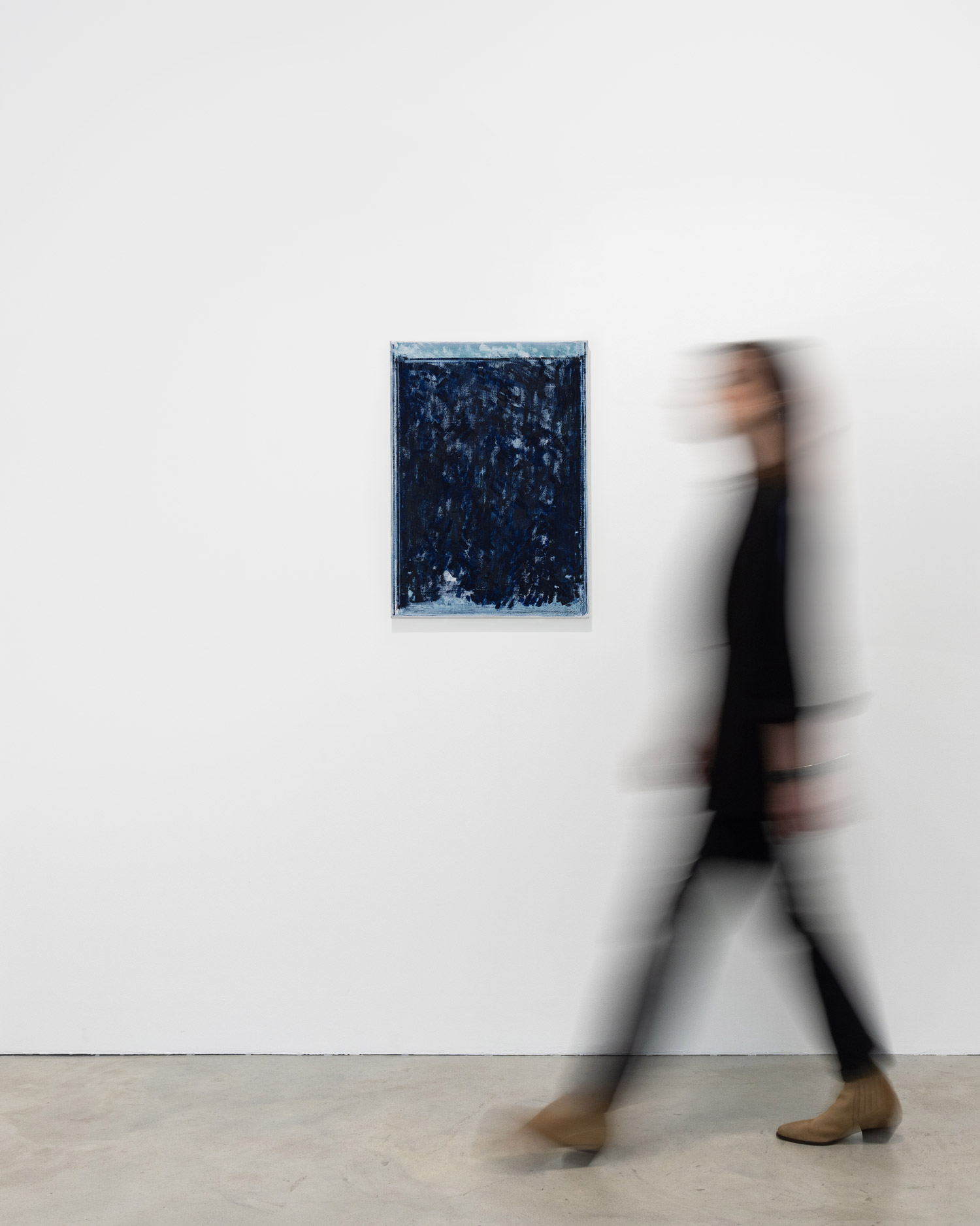
For me, Zurier’s works always carry a sense of lightness and devotion within them. He told me he wants his paintings to appear “easy, relaxed, almost undone” – even when their surface and painterly composition suggest something else. This is particularly striking in the smaller formats of the exhibition. The artist tells me he had wanted to make these new works “more direct,” and to give the smaller paintings, in particular, “an intensification and density.” This is clearly palpable. When I ask him whether there is one work in the exhibition he feels particularly close to, he tells me that there are many. When he feels attached to a painting, he says, it is because he knows “what they cost me” – the struggle and work involved, the time that passed between putting things down, or, at other moments, the speed with which something came together. He speaks of pushing through and suddenly seeing, of surprise, but also of being aware only of the sound of the brush and the feeling of floating. Rakovina (Seashell), he tells me, emerged from all of that.
John Zurier’s painting does not exhaust itself in reduction, materiality, or color. In its quiet restraint lies a special intensity. It does not seek to assert itself – and it doesn’t need to. Whoever opens themselves to these works is transported into a state in which seeing becomes a genuine experience.
along – between by John Zurier is on view until June 27 at Galerie Nordenhake in Berlin. The full interview can be read here.
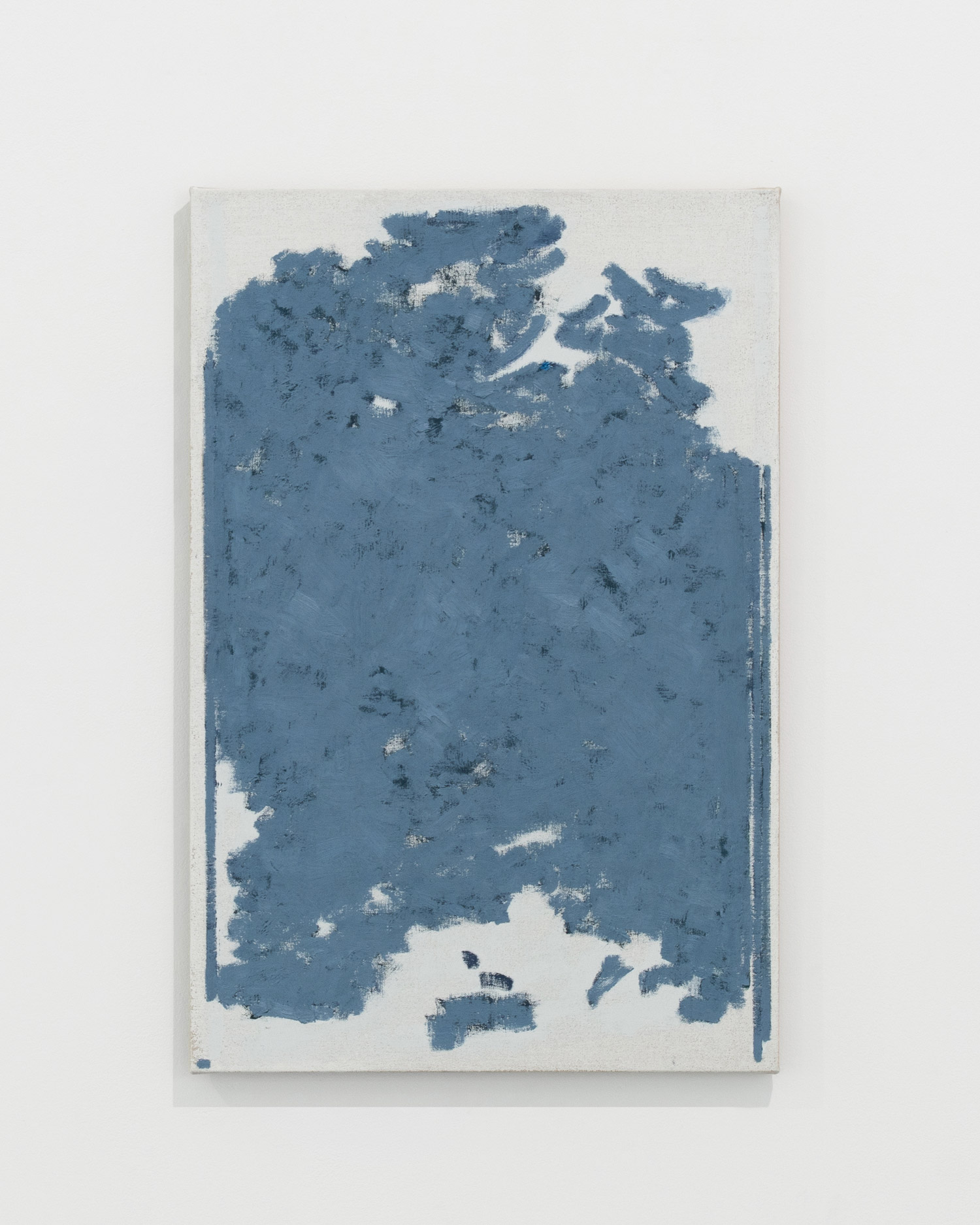
John Zurier, Path to the White Moon, 2026, oil on linen, 61 x 40.6 cm (24 x 16 in)
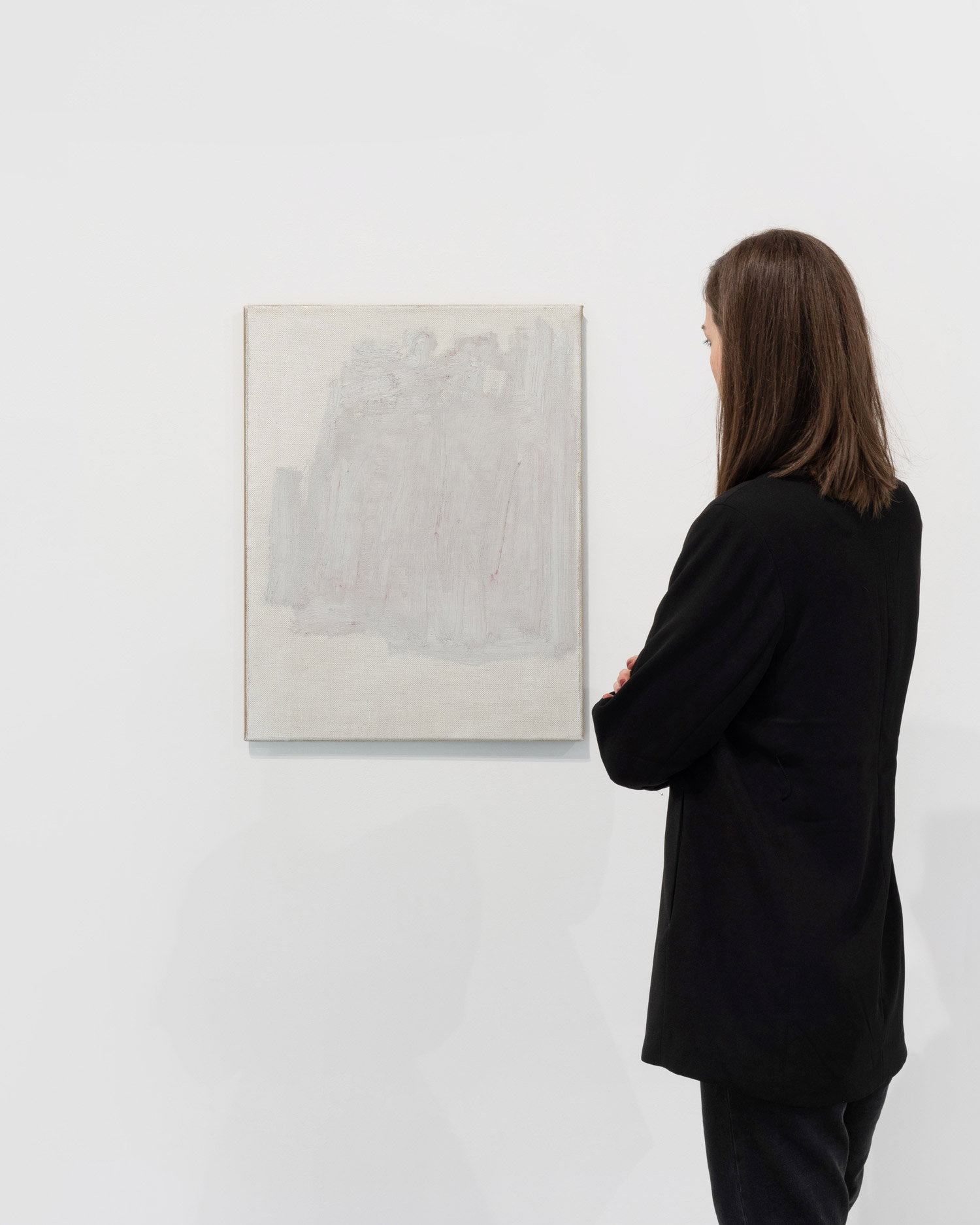
© The Artist, Photography by Aesence