From March 14 to August 23, 2026, Fondazione Palazzo Strozzi presents one of the most important exhibitions ever dedicated to Mark Rothko (1903-1970), the undisputed master of American modern art. Curated by Christopher Rothko and Elena Geuna, Rothko in Florence is a unique project conceived specifically for Palazzo Strozzi to celebrate the artist’s special bond with Florence. The palace’s architecture and the city itself provide the ideal backdrop to explore how Rothko translated the tension between classical measure and expressive freedom into painting, creating through color a new perception of space that transcends the two-dimensionality of the canvas.
Organized chronologically, the exhibition at Palazzo Strozzi retraces Rothko’s entire career: from the 1930s and 1940s, marked by figurative works in dialogue with Expressionism and Surrealism, to the 1950s and 1960s, defined by his celebrated classic paintings composed of vast fields of color capable of profoundly engaging the viewer through a language imbued with spirituality and poetry.
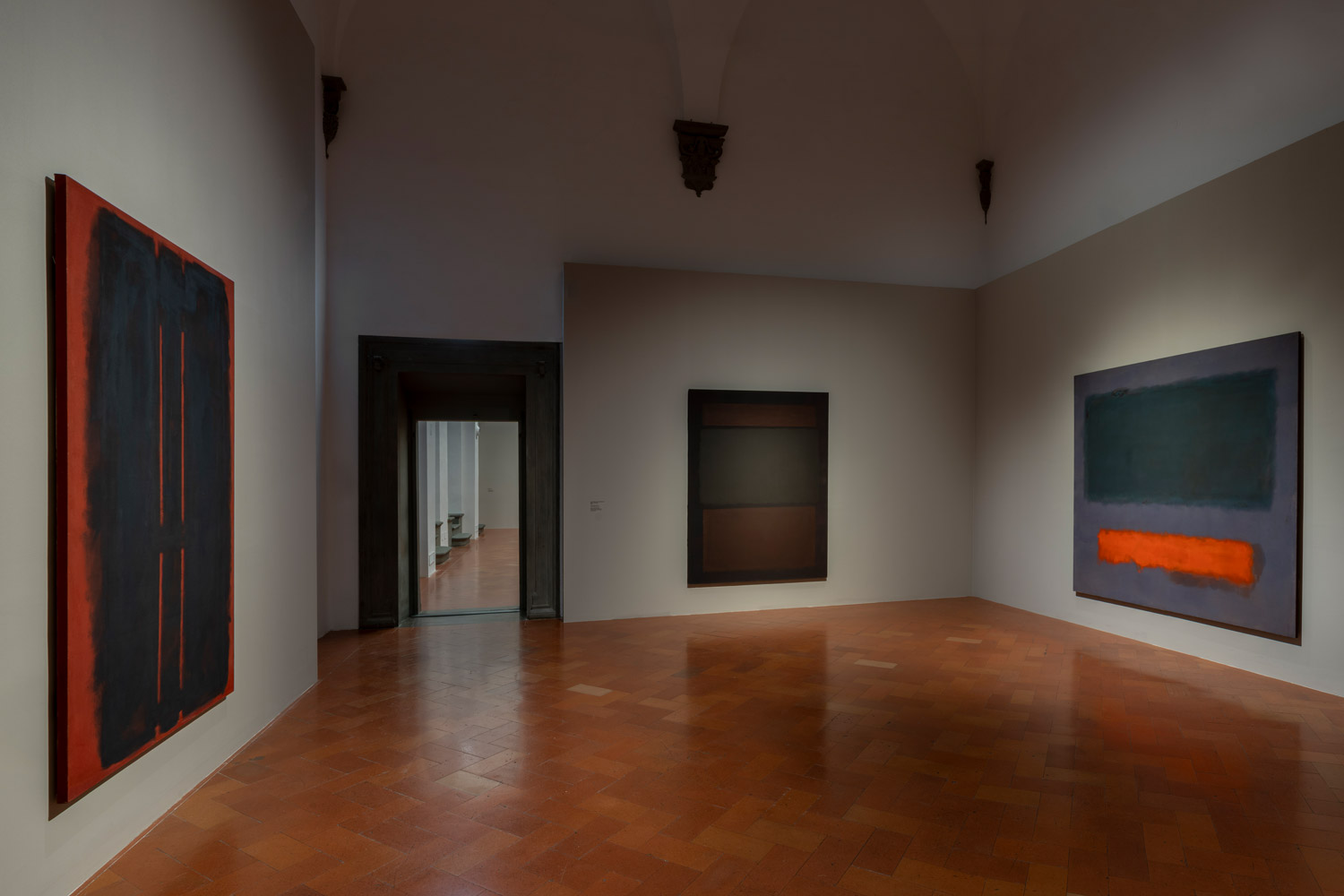
The exhibition brings together over 70 works, many of which have never before been shown in Italy. Its various sections illuminate the different moments of Rothko’s career, also documenting his deep engagement with the Italian artistic tradition.
Rothko’s first encounter with Florence dates to 1950, during a trip to Italy with his wife Mell. He was deeply moved by Fra Angelico’s frescoes at the Convent of San Marco and by Michelangelo’s architectural vision in the Vestibule of the Biblioteca Medicea Laurenziana, which would inspire the Seagram Murals painted in the late 1950s—a dialogue that Rothko further developed during his second visit to Florence in 1966. In some of his more delicate works, one can also perceive the influence of fifteenth-century Italian art and, in particular, of Angelico’s fresco technique.
Rothko and Angelico shared a desire to evoke a sense of transcendence, a dimension at once distant and profoundly familiar. While Angelico achieved this through the emotional resonance of divine figures in dialogue with earthly reality, Rothko created color fields capable of accompanying viewers into different emotional depths, challenging accepted notions of abstraction and color theory.
Throughout the exhibition, we have arranged intimate rooms where the personal interaction with Rothko‘s work is maximized and also enhanced by their resonance with the historic rooms themselves.
Christopher Rothko, curator of the exhibition
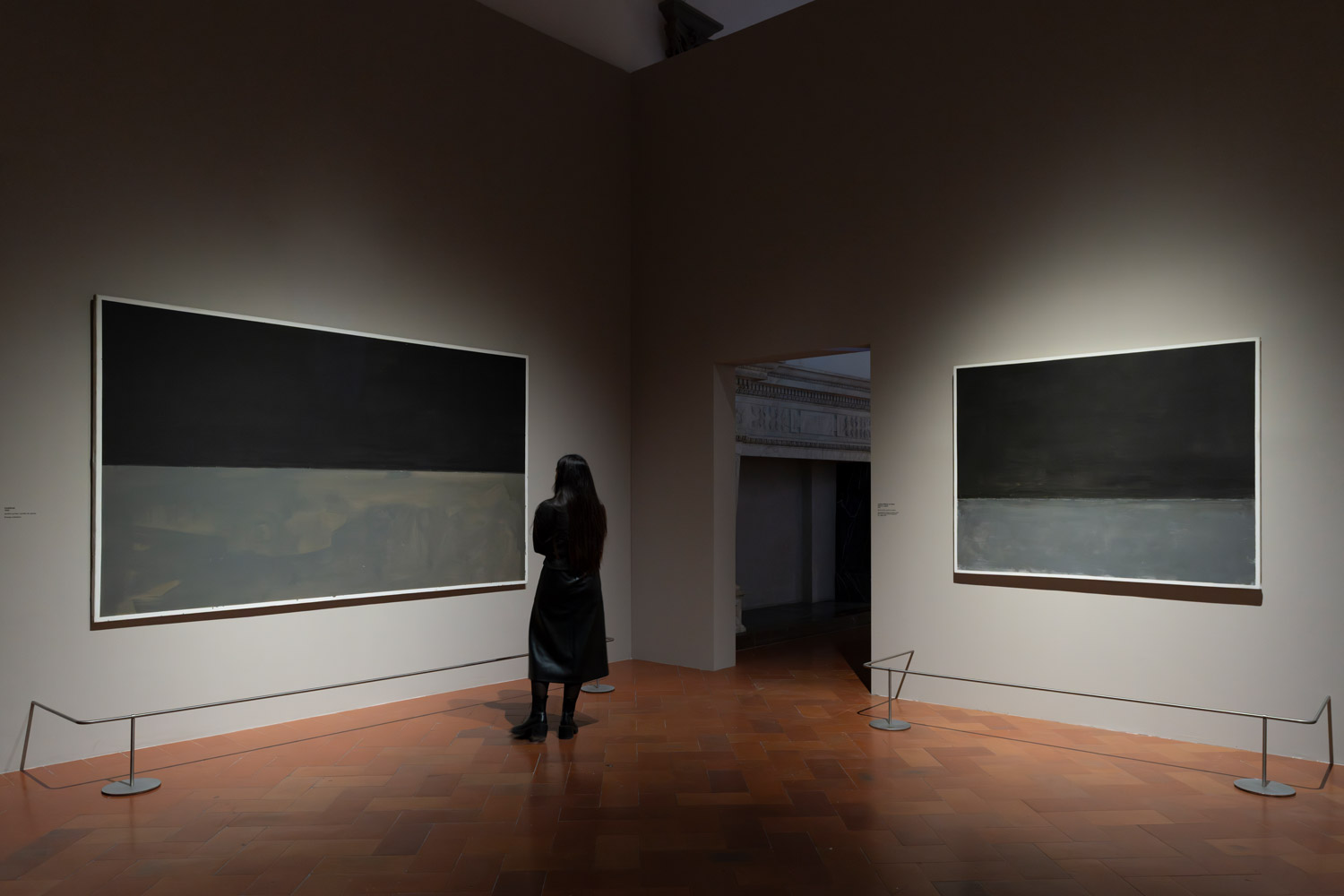
“Rothko’s personal encounter with Florence revealed to him a tradition where painting, architecture, and contemplation converge,” says Elena Geuna, curator of the exhibition. “This exhibition situates his work within that lineage, highlighting how the quiet intensity of Fra Angelico’s frescoes at the Museum of San Marco and the spatial tension of Michelangelo’s vestibule at the Laurentian Library influenced Rothko’s quest for paintings that could unveil the deepest layers of human emotions.”
© Text and Photo courtesy of Palazzo Strozzi