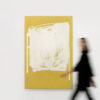
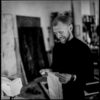
Stillness is a receptive state – one that creates space for the subtle and for what only becomes visible once the mind settles. This quality of stillness lies at the heart of Kaleen Cameron’s work. Through her restrained compositions, the Oakland-based artist invites viewers into a slower, more present way of looking.
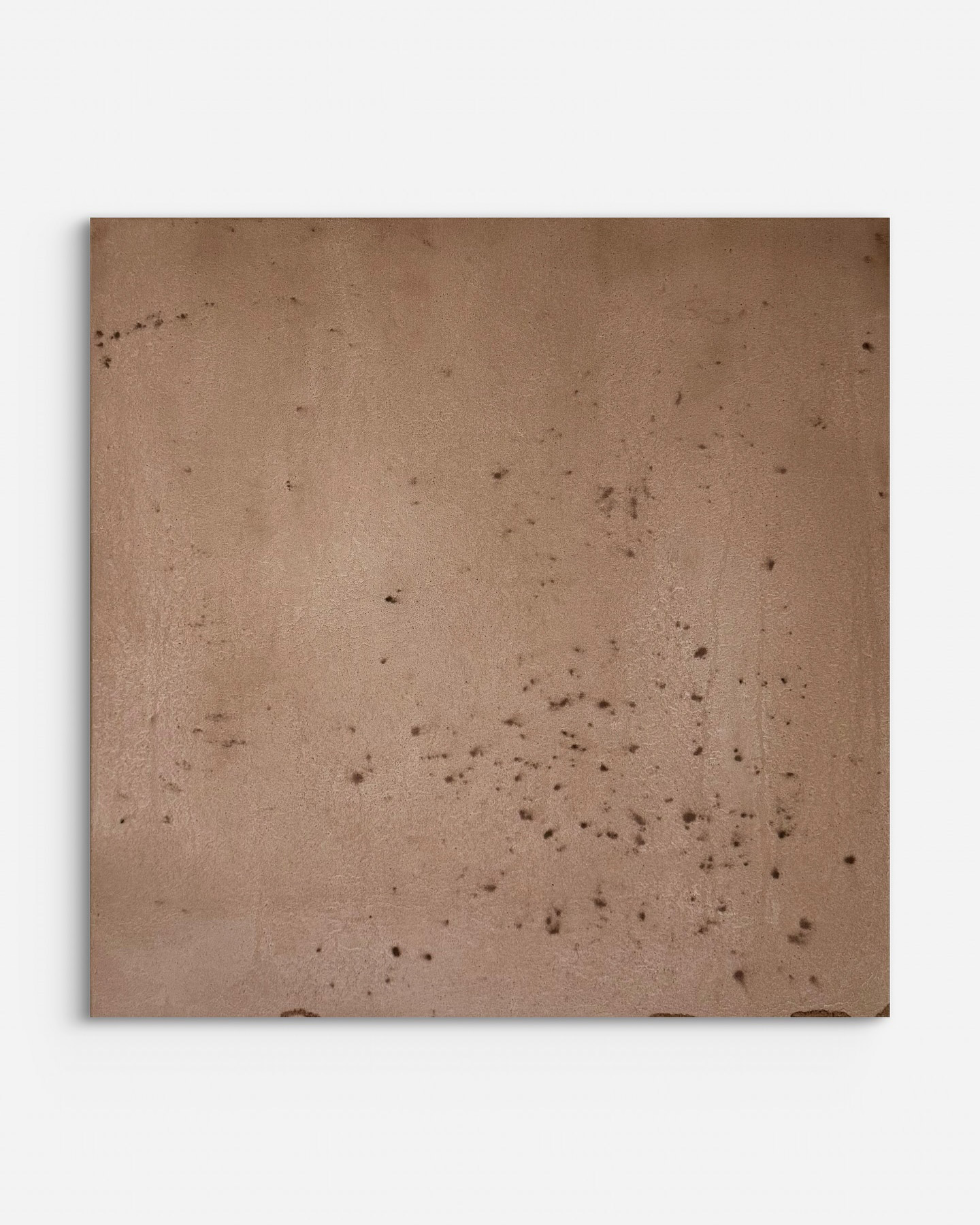
Working with acrylic, marble dust, and limestone on raw canvas, Cameron builds surfaces that feel dense and atmospheric at once. Her process is intuitive and layered: she begins with fluid washes of acrylic, letting the pigment sink directly into the unprimed fabric. From there, she gradually develops the work through layers of mineral-based materials, reintroducing water to soften and move the surface. This process unfolds as a balance between control and release as she lets the materials guide the painting toward its final form. The artist rarely uses more than one color per canvas, and her palette stays within a narrow range of earth tones. Yet within a single hue, small details take on significance. This gives her works a kind of quiet attraction, asking to come closer and notice what would otherwise remain unseen.
Much of her inspiration comes from nature, particularly from its more understated transformations: the way water leaves a trace or how materials soften and change over time. Those moments stay with her and find their way back into the work. In the following three questions, Kaleen shared more about her creative process and her works:
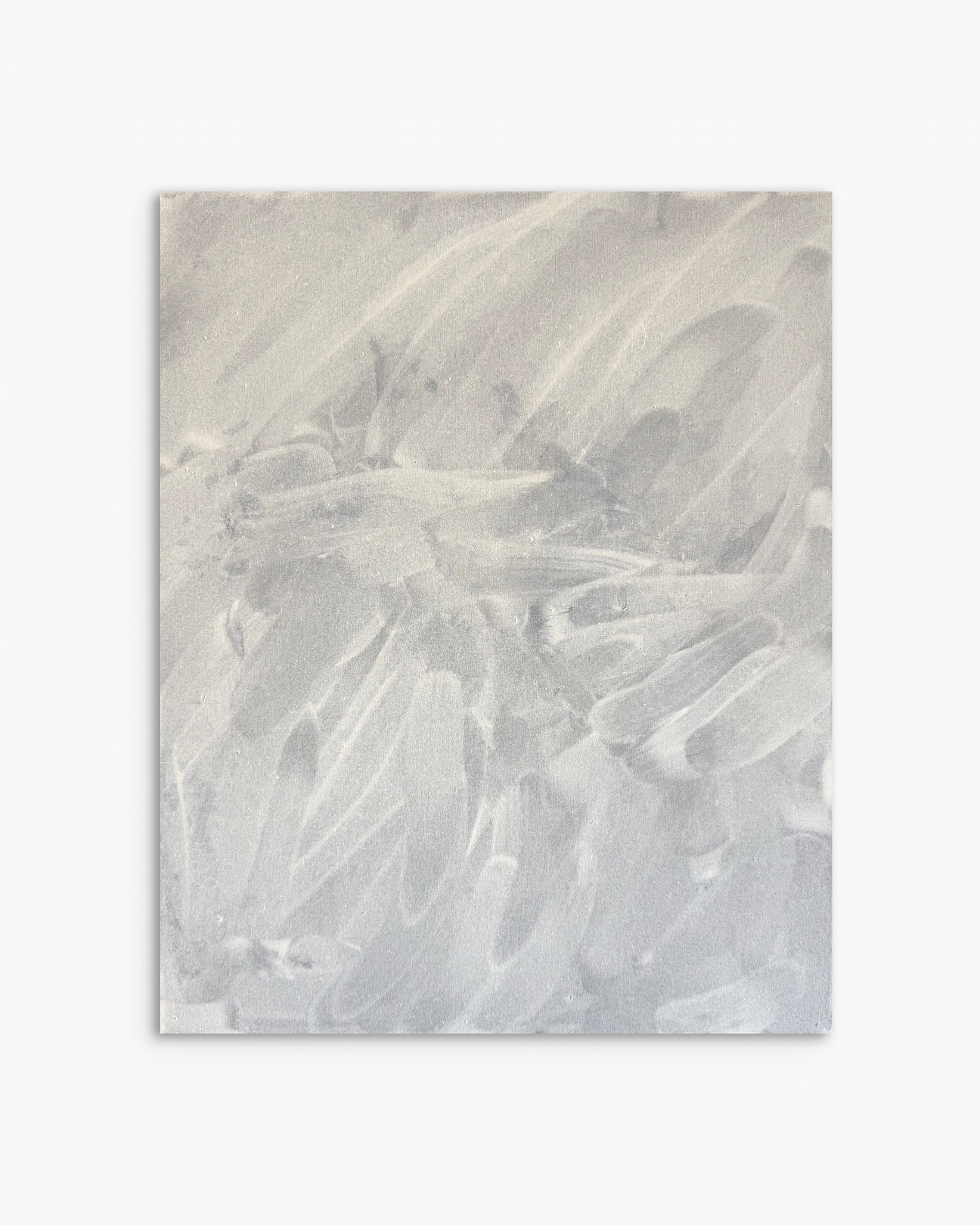
Kaleen, what inspired you to become an artist, and how has your artistic expression evolved since then?
My practice began from an instinctive need to create. It wasn’t a defined decision, but rather a gradual pull toward a way of working that felt intuitive and necessary.
Painting became a space where I could slow down and become more aware, of subtle shifts, of materials, of feeling. It’s a process that feels both calming and immersive, where I’m not trying to force an outcome but instead responding to what’s unfolding in front of me.
I initially explored working with plaster, drawn to its texture and the way it could create depth and variation. My work has since moved toward a softer, more restrained approach. The transition to raw canvas became central to this shift, allowing pigments to absorb and settle more naturally into the surface, creating a sense of fluidity and softness that continues to guide the work.
The evolution has been less about adding complexity and more about allowing fewer elements to hold more presence.
How would you describe your work to someone who has never seen it, and what do you hope viewers take away from it?
I’d describe my work as minimal and largely monochromatic, with a focus on texture and subtle tonal shifts.
The experience of the work is something that unfolds slowly. From a distance, it can feel quiet and still, but as you move closer, more begins to emerge through the layers, the variations, and the way the surface has been built.
What I hope viewers feel is similar to what draws me to create in the first place, a sense of calm, a moment of pause, something that feels grounding. Much of that comes from the way I experience nature, noticing small, often overlooked details, like how water leaves a trace or how light shifts across a surface. I’m drawn to those quiet moments, and the work becomes a way of holding onto that feeling and offering it to someone else.
Painting became a space where I could slow down and become more aware, of subtle shifts, of materials, of feeling.
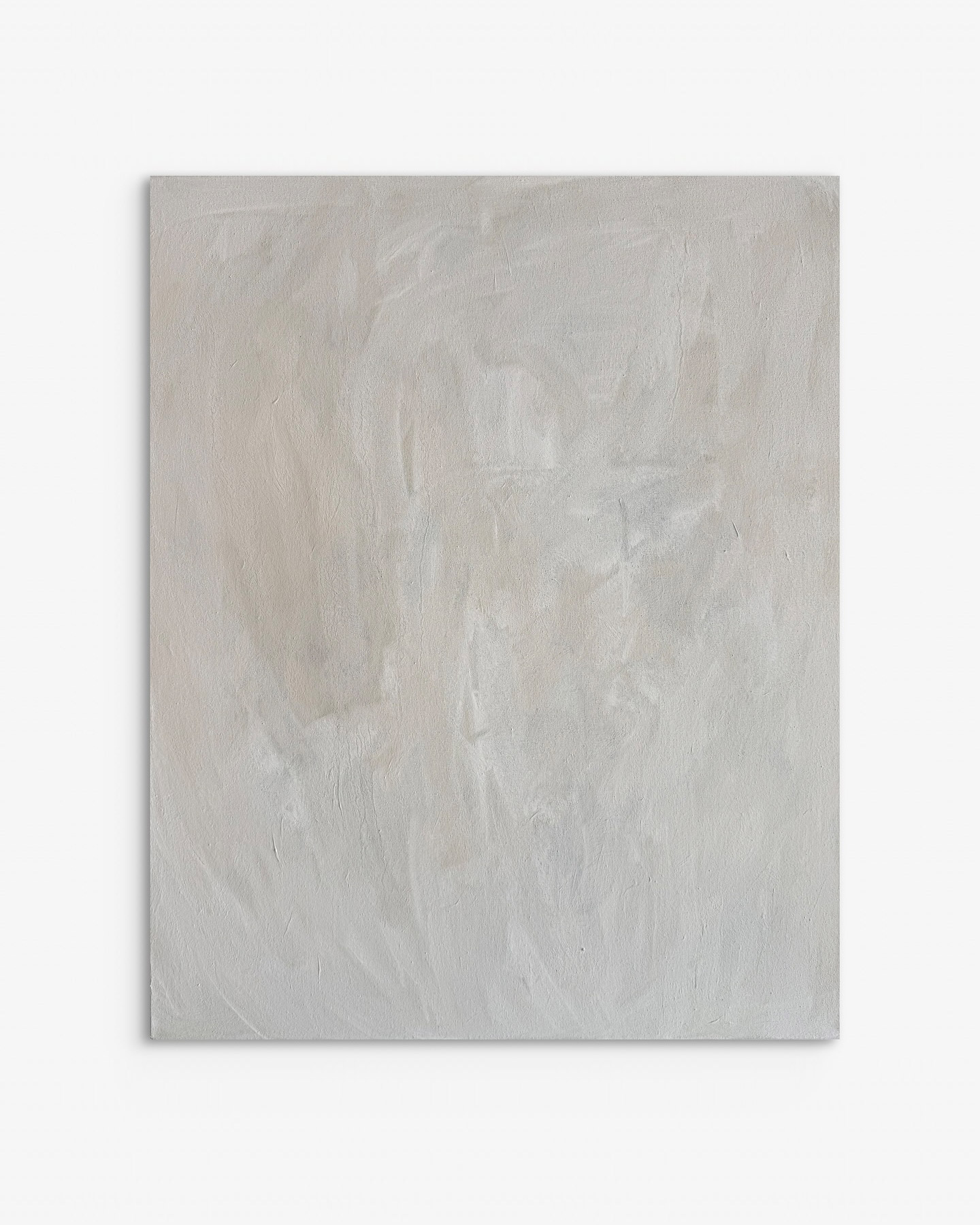
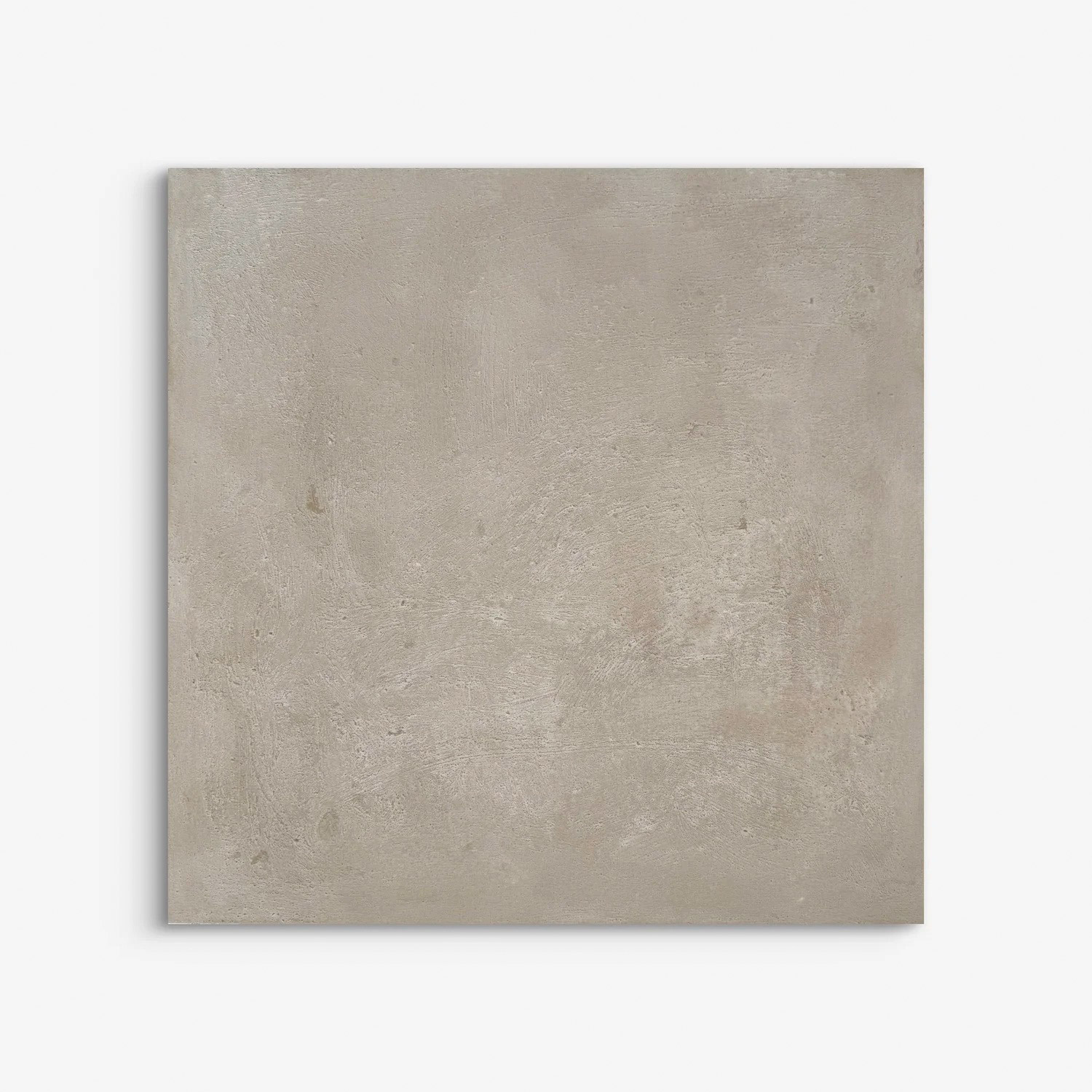
What are you currently working on and what are your plans for the future? Are there any subjects that you would like to explore further?
Recently, I’ve been working on a series using washes of acrylic on raw muslin. The palette has shifted slightly, introducing more saturation while still remaining grounded in softness.
I’m drawn to how the muslin differs from raw canvas. It’s a more delicate surface, and I’m interested in how the paint absorbs, diffuses, and settles into the fibers. The way the pigment moves through it feels less controlled than canvas, introducing a level of unpredictability that becomes part of the work.
Looking ahead, I want to continue exploring this direction while staying open to how the work evolves. The process often shifts in subtle, unexpected ways, and I try to follow those moments. Within that, the work continues to carry a consistent sense of calm, softness, and quiet.